
In Indian history, the Vedic culture is the most significant. Even on contemporary India, it has a significant influence. The Vedic culture serves as the primary inspiration for the religion, philosophy, and social norms of Hindus, who make up the majority of the population in India.
It has also made a respectable contribution to world culture in terms of spiritual and theological theories. Many academics have argued that the city-culture of the Indus valley was superior to the country culture of the Vedic era.
However, the majority does not agree with the claim. The Vedic civilization has made a significantly greater contribution to human advancement than the Indus valley civilisation, which alone is sufficient to establish its superiority. The Vedic civilization unquestionably holds a prominent position among world cultures and contributes a wonderful chapter to Indian history. The Indo-Aryans, an anglicised term for the original Aryans, were the creators of this culture.
The Aryans’ Prominent Origin:
There is disagreement concerning the Aryans’ ancestry. Regarding the Aryans’ ancestral homeland, various researchers have stated varying views and attempted to support their claims with evidence from history, philology, racial anthropology, and archaeological findings. South Russia, Central Asia, the Pamir Plateau, and Scandinavia. There is no agreement on this issue; alternative suggestions for the ancient home of the Aryans include Germany, Austria, Hungary, etc.
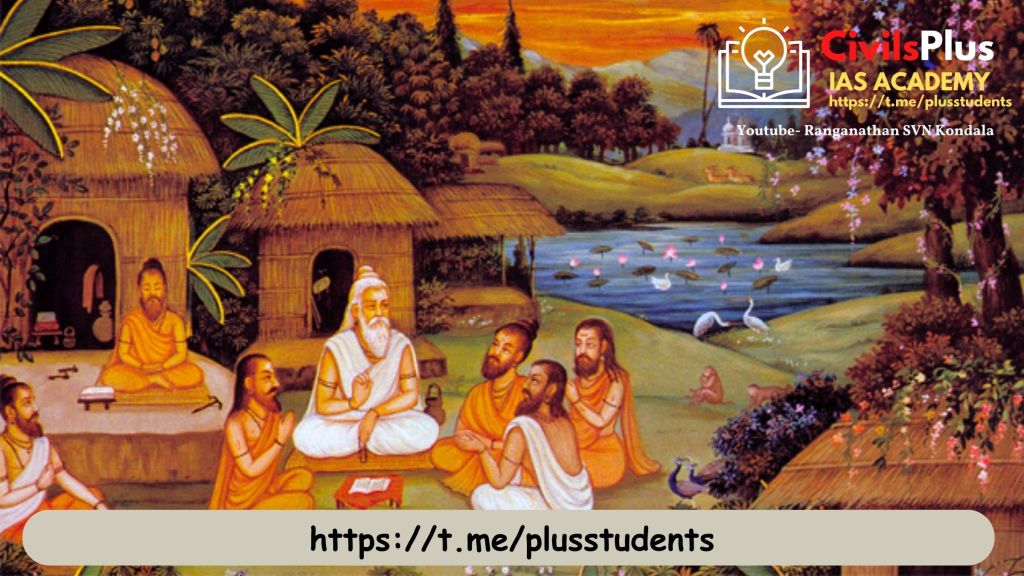
Tibet, according to Swami Dayanand Saraswati, was the Aryans’ original homeland. However, there is no evidence to support this claim.
The Indian nationalist leader Bal Gangadhar Tilak held the Aryans to be India’s original inhabitants. He made an effort to base his arguments on the Vedas. Many other Indian academics have made an effort to back up this theory.
According to Ganganath Jha, Brahmarishi-Desh, or India, was the original home of the Aryans. According to D.S. Trivedi, their initial home was in the region around Multan and the Devika River. D.S. According to Kala, it was Kashmir and the mountainous Himalayan region.
Rajbali Pandey argues that it was Madhya-desh, which is contemporary Uttar Pradesh, whereas Avinash Chandra Das maintains that it was Saptasindhu Pradesh, which is the Punjab and the Ganges-Jamuna Doab. These academics have made several arguments to support their claims. They contend that there is no description of any other kingdom or place outside of India in Vedic literature.
Animal sacrifice was the cornerstone of Aryan religion; this practise began in north Punjab, just as the rivers, mountains, climate, forests, and everything else mentioned in Vedic literature are all Indian. Additionally, it is asserted that the Aryans identified Saptasindhvah, the region between and close to the six rivers of Punjab and Saraswati (Sursuti in contemporary Haryana, which is now extinct), as their homeland.
In the north, it touched Rajasthan’s border; in the south, it touched Kashmir; in the west, it contacted Gandhara-Pradesh; and in the east, it touched the banks of the Ganges. The Rig-Veda makes multiple mentions of this country.
However, the majority of scholars do not agree with the claim made by these scholars. This viewpoint has most likely been upheld in opposition to the notion put forward by western scholars that Europe was the original home of the Aryans.

Fillippo Sassetti, who resided in Goa for five years (1583–88 A.D.), was the first European to assert that there was a clear connection between Sanskrit, the literary language of the Indo-Aryans, and several of the major languages of Europe. However, Sir William Jones made the first suggestion that this relationship is the result of their shared ancestry in his lecture to the Asiatic Society of Bengal in 1786.
He insisted that the origins of languages like Greek, Latin, Gothic, Celtic, Persian, and Sanskrit are the same. For instance, the Latin words pater and mater, the Greek words pater and mater, the English words father and mother, and the German words vater and mutter are nearly the same as the Sanskrit words pitar and matar.
Western scholars claimed that Europe was the original home of the Aryans based on the similarity of their languages. The notion was further bolstered by the comparison of racial physical characteristics and the Vedic scriptures’ descriptions of flora and animals.
P. Giles stated that all of the creatures, birds, and plants mentioned in the Vedic scriptures can be found in various parts of Europe rather than in India. Therefore, it is likely that the Aryans originated in Hungary, Austria, Bohemia, or the Danube Valley. Another researcher, Penka, analysed the physical characteristics of people of various racial backgrounds and concluded that the Aryans originated in either Scandinavia or, more likely, Germany.
After comparing various plant species, Nehring concluded that the Aryans originated in southern Russia. Brandenstain insisted that it was the grassy steppes and the area south of the Yural mountain, and Gordon Childe said it was south Russia or Scandinavia based on archaeological discoveries.
The similitude of language argument, however, is not a convincing one because it does not prove that two people have a similar ancestor or a language.
Similar claims of physical similarities have also been rejected by academics, and the same is true of the claim made by P. Giles. There is no proof that the plants and animals mentioned in the Vedic writings were present in the European nations at the time.
Another group of academics has maintained that central Asia was the Aryans’ initial home. Max Muller agreed with this viewpoint. He asserted that while one group of them made their home in Iran, the other group marched as far as India. There are similarities between Iranian Avestan Gathas and the Vedas’ descriptions of gods like Indra, Varun, and Nastya.
According to these academics, the environment of the Aryans’ original country should have been one where the cow and the horse, who were the main animals of the Aryans, could be located and survived. Such a climate only existed in central Asia. Mr. Max Muller’s viewpoint has also received backing from K.M. Panikkar.
According to Edward Mayer, the Pamir plateau served as the Aryans’ primary residence. Both Mr. Oldenburg and Professor Keith concur with this viewpoint.
South Russia was the Aryans’ initial home, according to recent studies, particularly those of Prof. Schrader. Dr. B.K. Ghosh concurs with this viewpoint.
It would be prudent, therefore, to stick to Schrader’s conclusion that south Russia, more than any other location, can claim to be considered as the cradle-land of the Aryans (Indo-Europeans), despite the vast growth in knowledge since his time.
As a result, we see that different academics have stated diverse viewpoints regarding the Indo-Aryans’ ancestral place, and there is still no agreement. As a result, it is challenging to speak highly of it. The majority of people believe that the Aryans, who were tall, generally fair-skinned, and long-headed, lived in the vast steppe territory that extended from Poland and south Russia to Central Asia.
They were primarily pastoralists who also did some farming. Most likely, their natural population growth or the need for pasture grounds compelled them to wander in the directions of the east, west, and south. They had tamed the horse, which they employed to power small, spoked chariots that gave them the advantage over their adversaries.
They moved in groups. Some invaded Europe and became the forebears of the Greeks, Latins, Celts, and Teutons, while others reached Anatolia and mixed with the native people there to form the vast Hittite empire.
Others travelled south and launched assaults on the civilizations of the Middle East from the Caucasus and the Iranian tableland. This stock included the Kassites who overcame Babylon and the Mitannis who overcame Syria. Others, however, remained in their own land and were the forerunners of the later Baltic and Slavic peoples. Those who had made their homes in Central Asia and Iran marched further east, through Afghanistan, and into India around 2000 B.C.
These people were known as Indo-Aryans. The Aryan invasion of India was a centuries-long event rather than a single coordinated action. A ferocious and drawn-out battle broke out as a result of resistance from the Dravidian inhabitants of India at the time. The fight was not just between two nations, but also between two different civilizations. The Dravidians undoubtedly put up a valiant battle, but they ultimately fell victim to the invaders’ attacks.
The victory allowed the Aryans to eventually take over the majority of North India, and the defeated locals, including the Dravidians and others, either succumbed to them, sought refuge in the South, or withdrew into hills and woods in the north, south, and east. The Aryans built the basis for both Indian and Vedic civilization in India by writing their holy writings.
The Rig-Vedic Civilization, or the Early Vedic Civilization:
The Vedic literature is the sole source of Vedic civilization. It includes the Brhamanas, Aranyakas, and Upanishads as well as the four Vedas (also known as Samhitas), the Rig-veda, the Sama-veda, the Yajur-veda, and the Atharva-veda.
The Rig-veda is a collection of hymns; the Sama-veda is a collection of songs mostly taken from the Rig-veda; the Yajur-veda is a collection of sacrificial formulas; the Atharva-veda is a collection of spells and charms; Brahmanas contain observations on various sacrificial rites and ceremonies; Aranyakas contain philosophic speculations about the nature of truth; and Upanishads elaborate further philosophic speculations of Aranyakas.
The revelation of the ultimate truth and reality, which was seen necessary for man’s emancipation, in the Upanishads indicated a backlash against sacrificial religion. Additionally, Vedic literature has also embraced a few other Hindu scriptures.
It contains six vedangas as well as sutras and smritis. The Graha Sutra and the Dharma Sutra are significant Sutras, and Manu, Narada, and Brahaspati Smritis are significant Smritis. The Sankhya-Darshana by Kapil, the Yoga-Darshana by Patanjali, the Nyaya-Darshana by Gautam, and other Hindu philosophical books are also contained in it.
The aforementioned Vedic literature and other related Hindu religious writings have been considered to be the most beneficial for human knowledge. Therefore, Hindus assert that the entirety of human knowledge is contained in their sacred books. Additionally, a number of these books offer us valuable historical information.
The Aryans had only written Rig-vedic samhitas (hymns) in the early stages of their colonisation in India. The Rig-veda is the only source for early Vedic civilisation. Its current text is made up of 1,028 hymns that are separated into ten books or mandalas. Regarding the time it was composed, academics have differing opinions.
According to Bal Gangadhar Tilak, it was written around 6000 B.C. The date was set by Jacobi at 2500 B.C. and Max Muller believed that it was written between 1200 and 1000 B.C. Most academics agree that the majority of its hymns were written between 1500 and 1000 B.C. Despite the fact that many of its hymns may have been written a century or more later.
The following information about the political, social, economic, and cultural life of the people during the Vedic Age is provided by the Rig-veda:
- geographic enlargement
The Rig-veda’s use of the term Saptsindhavah implies that it refers to a certain nation. It meant the land of seven rivers, and according to Max Muller, the Indus, its five tributaries, and the Saraswati (also known as Sursuti in contemporary Haryana, which is no longer there) make up the seven rivers. This is also the widely accepted theory. There have been few mentions of the River Yamuna and just one mention of the Ganges.
As a result, the Aryans were primarily restricted to Punjab throughout this time, even if their outlying settlements in the east extended as far as the banks of the Yamuna and the Ganges. However, it appears that certain Aryan tribes continued to exist on the western bank of the Indus river based on references to Kabul, the Swat, the Kurram, and the Gomal river.
As a result, the Aryans lived in Eastern India up to the river Sarayu, Afghanistan, the Northwest Frontier state, Punjab, Kashmir, parts of Sind, and Rajputana.
- Aryans versus non-Aryans:
There was constant conflict among the Aryans themselves as well as between Aryans and non-Aryans, who were referred to by the Aryans as Dasas, Dasyus, Asuras, etc. The Rig-veda contains numerous hymns that attest to the Aryans’ continual reliance on their deities for protection from non-Aryans. The primary Aryan deity attributed with the honour of massively destroying non-Aryan forts or Puras was Indra.
The Aryans themselves were split up into numerous tribes that competed with one another for control over new territory. They frequently asked non-Aryan kings for assistance. One such significant conflict is described in the Rig-Veda as the Dasrajana or Battle of the Ten Kings.
Sudas was a Bharata monarch from the Tristsu line who lived in the region that would eventually be called Brahmavarta, which is the region between the Sarasvati and Drishadvati rivers. When Sudas fired his priest Visvamitra, he replaced him with Vasishtha. Following a long and acrimonious conflict between the two monks, Visvamitra formed a tribal alliance of ten monarchs against Sudas as retaliation.
The five well-known tribes, Puru, Yadu, Turvasa, Anus, and Druhyu, as well as five lesser-known tribes, Alma, Paktha, Bhalanas, Siva, and Vishanin, made up the federation. Dr. D.D. Kosambi added another justification for this conflict. According to his opinion, the attempt by the alliance of ten kings to alter the course of the river Purushni (modern Ravi) was the main reason for this conflict.
This fight was won by Sudas. He had to engage in yet another crucial war against the alliance of the three non-Aryan tribes, the Ajas, Sigrus, and Yakshus, led by king Bheda. He won once more, rising to become the most potent Aryan ruler of his day. These Rig-vedic references give us some insight into the political climate, kingships, and numerous tribes of Aryans and non-Aryans at that period.

At that time, there were conflicts between Aryans and non-Aryans. The Dravidians were the majority of the non-Aryans, however there were other races there as well. These several races have been referred to by various names in the Rig-veda. The Aryans referred to them mostly as Dasyu, Dasa, Ajur, Rakyash, etc. They were all viewed as rivals to the Aryans and their deities. They engaged in a fierce battle with the Aryans.
Many hymns in the Rig-veda are dedicated to praising the gods of the Aryans for their assistance in demolishing these non-Aryan forts and villages. The main deity of the Aryans who demolished these non-Aryan forts was Indra. In the end, the Aryans who had sharp weapons and horses for chariots won the conflict, and the non-Aryans either recognised their superiority or fled to the hills, jungles, or south India.
- Political Structure:
The Rashtra (tribal kingdom) was the name of the nation. Rajan, or the king, was the title given to the ruler of the state and the tribe. Later, the term Samrat—which signified emperor—was also in use.
It might have been applied to a king who ruled over multiple rulers. Since the rulers at the time were primarily tribal chiefs, it is not acknowledged that anyone assumed the title of Samrat. Most likely, Rashtra was divided into Janas.
The Jana’s officers were known as Gop. Each Jana was split into smaller components known as Visa. Vispati was the title of a Visa’s administrative chief. The smallest group was the Grama village, whose leader was Gramani. The community was made up of a number of Kulas, or families. A Kula’s or family’s head was known by the names Kulapa, Kulpati, or Grahpati.
(i) The monarch:
The most common form of political organisation was hereditary monarchy, but there are allusions to instances in which the populace chose the king or expelled a terrible monarch from power. Additionally, the Gana with the Ganpati or jyeshtha (elder) as its head has been mentioned. Therefore, it’s possible that republican states were present at the time in some circumstances.
Scholars have many theories about how India’s monarchy came into being. According to Narayanchandra Bandopadhyav, fighting creates the monarch. According to Beni Prasad, humans were given monarchy by God, and the demands of war enhanced it. K.P. According to Jayaswal, the Dravidians and V.M. gave it to the Aryans to adopt. According to Apte, the institution of monarchy was logically developed as a result of the patriarchal structure of Aryan society and the requirement for cohesion and organisation under a strong leader.
However, the majority holds that the institution of monarchy was formed as a result of the need for effective military leadership. There are references to the fact that after being vanquished by demons, gods picked a monarch from among themselves to lead them in battle.
The king served as the head of state. The king’s authority was unrestricted by law, but in reality, it was constrained by his own obligations (Rajva Dharam), the authority of his top officials, and the will of the people. The king’s key responsibilities included leading his people in battle, protecting their lives, honour, and property, punishing the guilty, and supporting priests who offered sacrifices.
His wealth came from the tribute given by the tribes he had subjugated as well as the voluntary payment known as bali paid by his own citizens. The land, however, did not belong to the king. It belonged to the tribe collectively. Most kingdoms at the period were small.
The king nevertheless had a position of dignity. He was crowned king in a ceremonial ceremony, dressed in exquisite robes and priceless ornaments, and resided in a home that was larger and more lavishly decorated than those of the common people. Although there are certain cases where a king was elected or a terrible king was removed from the throne, most kingships were hereditary.
(ii) Chief Executives:
The king’s top officials were the Purohita, Senani, and Gramani. The head priest, The Purohita, had close relations with the king. There are significant Purohit examples like Vasistha and Visvamitra that attest to this.
Following the king, the Senani led the army, while the Gramani served as the monarch’s top official in charge of village government. The king also used spies and Dutas (envoys). Other than these, there must have been a great number of officers, but little is known about them.
Army Organisation (iii)
Charioteers and infantry were the army’s primary combatants. Chariots occasionally had three to four horses. The soldiers’ primary weapons included bows and arrows, lances, spears, and strings. They were covered in mail and wore helmets for protection. Pur Charishnu, a mobile engine, was another tool the Aryans employed to attack enemy strongholds.
Justice (iv)
At this point, there were no conventional legal institutions. Custom served as the basis for law, and the monarch and his purohita served as the judges, occasionally with the help of certain community elders. The main offences included cattle-lifting, theft, burglary, and robbery.
Criminals were frequently punished by being chained to a stake. A wergild system of punishment was likely used to punish murder, and the typical ransom for a man’s death was one hundred cows. Several times, prisons are mentioned. It implies that most offenders received punishment and were released. The death penalty was introduced afterwards.
(v) Well-known Gatherings:
The sabha and the samiti, two assemblies, were crucial parts of the government. Scholarly opinions on their history, structure, and authority have varied. N.C. Bandopadhyay saw the samiti as an assembly of all tribal members and the sabha as a body composed of a select group of privileged and significant people. K.P. According to Jayaswal, the samiti is a body that represents the villages, and the sabha is a central committee made up of a select group of influential people who operate under the direction of the samiti.
The samiti, a political body of the national government, the sabha, a body that represents the villages, and V.M. were all accepted by Dr. Altekar. Apte saw the sabha as a small, insignificant committee and the samiti as a larger, people-representing body.
The samiti, according to the majority opinion, was a gathering of a larger number of people to conduct tribal business and was presided over by the king, whereas the sabha was a group of a few chosen individuals to assist the king in administration and was less well-liked and political in nature than the samiti.
It is challenging to precisely define the roles and responsibilities of both assemblies, but it is generally acknowledged that both possessed a great deal of power and must have served as beneficial balances on the king’s authority. Although it is obvious that their opinion was sought on significant questions of state, it is also unacceptable that the king carried out the administration based on it.
Republics and oligarchies (vii)
There were some Rashtras known as Ganas or republics. There, the rulers were referred to as Ganpati or Jyeshthas and were chosen by the populace. There were various additional kinds of states where certain persons held shared power as well. They were referred to as oligarchies. However, there weren’t many Ganas or oligarchies. Most of the time, hereditary rulers presided over the states.
- Personal Life:
The foundation of social life was the patriarchal family. The typical form was the joint-family arrangement. Father served as the family’s head, and his eldest son succeeded him. While her husband was still living, the mother also held a respected position. A son’s birth was considered lucky.
Adopting children was a common practise, however it was largely avoided:
(i) Marriage and Women’s Status
The bond between a husband and wife was seen as holy. The desire for offspring was the main reason people got married. Although polygamy was not prohibited, monogamy was the most common type of marriage. Polyandry is not mentioned at that time. Since child marriages were not common, young people had a great deal of freedom in choosing a bride or spouse because they often got married when they were adults.
Most likely, relationships including marriage with Dasyus or non-Aryans were forbidden. Only the union of a brother and a sister and a father and a daughter was forbidden among the Aryans. If widow weddings were permitted or not is unclear.
However, widows were allowed to get into a Niyog (temporary marriage) with any of the husband’s siblings in order to have a son. There was no Sati tradition. There were incredibly few cases, and even those were only found in royal households.
No dowry system existed. Only when the interested party experienced a physical deficiency was it supplied or taken. The purdah system did not exist. The ladies did not always stay indoors; they were free to travel around, go to public feasts and amusement events, and even visit battlegrounds.
Although there were no restrictions on their education, it was actually only available to those in the higher classes. Some women, like Visvavara, Apala, and Ghosha, became rishis through creating mantras. Therefore, compared to other individuals of contemporary civilizations, women held a more respectable position among the Aryans.
Women did not, however, have the same social and legal privileges as men. They lacked any ownership rights. Male family members had to continue to look after them; before marriage, it had to be their fathers or brothers, and after marriage, it had to be their husbands. Only in the roles of mother, wife, or daughter did the women receive respect.
The Varna-System (ii)
The three social strata of warriors, priests, and commoners existed among the Aryans when they arrived in India. At that time, there were no limits on marriage or dining among these classes, and occupations were not passed down through families. The need to uphold class divisions didn’t emerge until the Aryans interacted with non-Aryans and gave them a position in their society.
However, the Dvija, or twice-born, and Advija groups were the sole divisions made by the early Aryans. All Aryans—warriors, priests, and commoners—were referred to as Dvija, whereas non-Aryans and individuals of mixed ancestry were referred to as Advija. The fourfold divide, or chaturvarna-system, had begun to take shape during the later period of the Rig-veda, but the differentiation was still maintained principally on the basis of skin colour, or varna as it is known in Sanskrit.
The priestly class among the Aryans was known as the Brahmana, the warriors as the Kshatriyas, the commoners engaged in agriculture, pastoral activities, trade, and industry as the Vaisyas, and the Dasas or non-Aryans as well as people of mixed ancestry were given the status of the Sudras.
Thus, the chaturvarna system, which subsequently underwent shape and meaning changes until being superseded by the caste system that is still in use in India, had its origins during the later Rig-vedic period. In addition, the system was not rigorous other than the way the Sudras were recognised from the other groups. Within the three highest varnas of society, there were no restrictions on marriages or interdining. Changes in varna were frequently possible with changes in career.
Males being donated to others is only occasionally mentioned in the Rig-Veda, although female donations are frequently mentioned. As a result, it appears that wealthy individuals retained slaves in their houses as a sign of respect for society. But it is undeniable that slavery did not exist throughout the early Vedic period as a means of production, either in agriculture or in the production of any other good.
(iii) Clothing, food, etc.
The main vegetarian foods consumed by the Aryans were yava, which is likely to indicate wheat, barley, and beans. They used flour to make bread and cakes. Along with fruits, vegetables, and sugarcane, milk and its many preparations, including ghee, butter, and curd, were also popular dietary items. Normally, people would eat the meat of sheep, goats, and oxen. Only when a horse was sacrificed was horse flesh eaten, and the same was true with beef.
Vasas, or barren cows, were the only animals sacrificed. They most likely consumed rice, although it is impossible to say for sure whether they consumed fish. Since there is no mention of rice in the Rig-veda, Dr. R.S. Sharma has concluded that the Rig-vedic-Aryans did not cultivate rice.
Rice probably wasn’t introduced to the Aryans until much later in the Rig-veda. The Aryans’ favoured beverages were Sura and Soma. Most likely, Soma was bhang, a drink used as a sacrifice, whereas Sura was a popular intoxicant made from grain and was similar to wine or whisky.
Males and females wore nearly identical attire. Adhivasa and Vasa were the names of the upper and lower garments, respectively. Another undergarment known as a nivi was likely solely worn by women. Female dancers appear to have worn pesas, an embroidered garment. The bride at a wedding ceremony wore a distinctive outfit.
This is what R.S. According to Sharma, Rig-Vedic Aryans were unaware of the cotton plant, hence they did not use cotton for clothing. However, according to other academics, both cotton and woollen clothing in a variety of colours was used at the time. Most likely, cotton was discovered by the Aryans in the latter Rig-Vedic era. Animal skins were also occasionally used to make clothing.
Members of both sexes wore a variety of jewellery, made of both gold and valuable stones. Men and women alike frequently wore jewellery such as armlets, necklaces, ear rings, and finger rings. The Kurira was a type of headgear worn particularly by brides. The ornaments Nishka, Rukma, and Mani were also very popular.
Men and women both oiled and combed their plaited or braided hair. Men typically wore short hair, while women typically wore long hair. The males occasionally shaved their beards and moustaches in addition to growing them.
The Aryans had not yet developed cities by this time. They resided in settlements. Clay and bamboo were used to construct the homes. Roads were constructed, and although riding horses was also very fashionable, carts and chariots were the preferred mode of transportation and communication.
The Aryans’ principal forms of recreation included the chariot race, hunting, dice games, dancing, and music. There was a lot of vocal and instrumental music. They were quite accustomed to the drum, lute, and flute. Men and women both had fun during festive gatherings that included music and dancing.
(iv) Virtues:
The majority of Aryans had happy, carefree lives, but they also upheld moral principles and performed their duties. Theft, robbery, lying, sorcery, witchcraft, seductions, etc. were not only condemned but also punished infractions while they observed truth, honesty, good thoughts, good deeds, aiding the poor, hospitality to guests, etc. They prayed to God Varuna to release the chains of their sins and to God Agni to encourage them to think virtuously.
Education (v)
The Upanayana-ceremony, which involves presenting a kid to the instructor to begin his studies, had not yet gained popularity at this point. The father gave his children their early schooling at home, and when they were ready for more, they were sent to live with their teacher. The teacher gave the instructions orally, and the students were required to memorise them. The skill of writing was unknown to the Aryans at this time. They probably just started using a script around 700 B.C. The fundamental purpose of education was to foster character development and mental growth.
- Financial Life:
A combined pastoral and agricultural economy was practised by the Aryans. They utilised huge ploughs drawn by six, eight, twelve, or even twenty-four oxen in later stages, but they initially dug their fields with a pair of oxen strapped to a yoke. Artificial canals are mentioned, indicating that they were aware of the irrigation system.
The raising of cattle was their second main source of revenue. Instead, it would be more accurate to argue that, in the early phases, the Rig-Vedic Aryans’ principal profession was raising cattle because we observe a significant influence of tribal organisation on their early social and political set up. Only later did agriculture take precedence over cattle raising.
The cow held a significant position in it and was also utilised as a medium of commerce and a store of value. It was viewed as property, along with other domesticated animals. The horse also had a high value. Sheep, goats, asses, oxen, and dogs were among the other domesticated animals.
Hunting also has practical economic benefits. Lions, bears, buffalo, deer, birds, and antelopes were among the prey they pursued. They caught them with nets as well. Although the plough was made of wood, its application was undoubtedly new at the time. Additionally, they employed irrigation techniques and dug extensive wells for that reason.
During the Rig-Vedic era, iron had not yet been found by the Aryans.
Weaving, in both cotton and wool, was another significant profession that produced clothing for the populace. Priest, carpenter, jeweller, leather worker, doctor, butcher, dancer, pianist, etc. were among the other vocations.
According to Dr. R.S. Sharma, the Rig-vedic Aryans did not engage in marine trading. They were unable to produce as much as would have left a surplus for sale because they were so busy fighting wars. However, B.M. and Dr. R.C. According to Apte, these people engaged in maritime trade and maintained business ties with Babylon and other Western Asian nations. All academics believe that internal trade was conducted on both land and by rivers, though.
Since the Aryans lacked currencies, they relied on a barter system to exchange goods. But the cow had evolved into a measure of value and a means of exchange. There is mention of a further medium of exchange known as nishka, which was possibly a fixed-weight piece of gold that served as a form of currency.
The Aryans lived a flourishing economic life overall thanks to their natural resources for farming and livestock raising.
- Religion:
The Rig-veda makes mention of thirty-three gods. The male gods had the upper hand among them. The Rig-veda’s hymns, approximately one-fourth of the entire collection, were sung in Indra’s petition, making him the most famous god among them despite the lack of hierarchy and a recognised leader among them. As each of their gods stood for a different natural phenomena, the religion’s fundamental tenet was the worship of nature in all of its manifestations.
The Rig-vedic gods could be broadly divided into the following three groups:
(a) The gods of the earth, like Prithvi and Agni. Brihaspati. Soma. etc.
(b) The deities of the atmosphere, include Indra, Rudra, Marut, Vayu, Parjanya, etc.
Celestial deities including Surya, Usha, Savitri, Vishnu, the Moon, and Varuna, among others.
Among them, Indra, Varuna, Agni, Soma, and Surya were unquestionably prominent deities. The only weapon of the most powerful god, Indra, was the Vajra. Although he was formerly thought of as a god of rain and thunderstorms, most scholars now concur that he was actually a god of light.
Now, Marut is revered as the deity of thunderstorms, and Parjanya is revered as the god of rain. The god of power and the opposer of morality was Varuna. Agni was the deity of food and the means by which all gods consumed the offerings made to them as sacrifices. Surya was the deity of light, and Soma, a common beverage among the Aryans, was given a position among the gods.
The worship of gods was seen as the foremost responsibility of man, and the Aryans’ religion was predominately ritualistic. Their religious ceremonies consisted mostly of Yajnas, prayers to the gods, and the sacrifice of various objects, foods, and animals in an effort to appease the gods and gain their favour in exchange for honour, wealth, power, and material comforts. Although the Aryans worshipped a variety of deities, philosophically speaking, they were monists. They had developed a belief in a supreme God—the ultimate power—whose various manifestations in other gods.
Although the Aryans had thought about life after death and held views on the existence of hell and heaven, they did not place much emphasis on it. They cherished this existence and prayed to their gods to provide them success and happiness.
They did not yet understand that this existence is a lie (maya) and a terrible one. Even though the concept of Karma, or the rule that good or terrible outcomes follow from actions, was not yet well-established, it was acknowledged by the gods.
As a result, the Rig-vedic religion had the following characteristics:
I. The Aryans always expected power and prosperity by appeasing their gods, therefore their religion was utilitarian.
II. The Aryan-gods were benevolent and gave them anything they wanted.
III. The male gods held a disproportionately large share of the deity population.
IV. There was no worship of idols.
V. The religious community had a positive outlook on life. They were more drawn to the pleasures and joys of this world than to heaven’s afterlife.
VI. Because the lord of the house, Grahpati, conducted most of the religious rites, the priestly elite was still ineffective in matters of religion.
VII. The concepts of Karma and soul transmigration, which state that the soul never dies and constantly reincarnates after a person dies unless they achieve Nirvana, were not yet fully established.
Therefore, the Rig-vedic period has its own unique characteristics that set it apart from the later Vedic period and give it its own significance. According to Dr. R.C. Mazumdar, who describes the significance of the Rig-veda, “The Rig-veda is, therefore, justly regarded as a source-book of first rate importance for the study and appreciation of the gradual development of Hindu culture, and no wonder it is revered by three hundred million Hindus today as the holiest of the holy.”
The Later Vedic Culture:
the time span between 1000 and 600 B.C. is thought to be the later Vedic age. It also includes information about the time of the epics, the Mahabharata, and the Ramayana. The attempts of some earlier experts to distinguish a “Epic Age” from the later Vedic Age in Indian history are utterly unpersuasive.
In Indian history, there was no unique Epic era. The epic Mahabharata conflict most likely occurred around 850 B.C. While the Ramayana account makes reference to Aryan migration to the South earlier than that time.
Similar to this, it’s likely that the heroes of the Mahabharata have some historical support for their roles as various kingdom kings. Although Rama’s father-in-law Janaka, king of Videha, is unquestionably recognised as a historical figure, it is uncertain if Rama, the protagonist of the Ramayana, was a king of Kosala. There is no need to analyse the Epic period separately from a historical and cultural standpoint because it is always included in the discussion of the later Vedic Age.
There are essentially none at this point in terms of archaeological sources. The lowest level of the recently excavated sites for the ancient cities of Hastinapur, Alamgirpur, Batesar, etc. has been determined to date between 1000 and 700 B.C., or the time of the later vedas. Only a few copper tools, a few iron weapons and tools, remnants of unbaked brick buildings, and a small amount of painted grey pottery have been found. Additionally, remnants of this pottery have been discovered in the eastern Sarasvati river basin.
But these discoveries don’t really benefit us. Additionally, a number of academics have argued that the relics found in these and other locations scattered throughout India do not come from the later Vedic period but rather from village civilizations that existed in India during the later Chalcolithic period, when residents of some locations were also familiar with iron.
Even after the collapse of the Harappan civilization and before the arrival of the Aryans, several civilizations continued to exist in India. As a result, Brahmanas, Aranvakas, and Upanishads—three later Vedic texts—remain the primary sources of this era.
- Extension to a larger area:
The Aryans migrated during this time towards the far South and East, reaching as far east as Bengal. The Aryans had migrated to India’s southernmost and most remote regions by 400 B.C. However, there are references to the independent existence of several clans in south India, such as the Andhras, Shabars, Pulinda, etc., who remained unaffected by the Aryan culture.
Therefore, we get the conclusion that north India was the exclusive location of the later Vedic culture. The Punjab and the North Western provinces lost their significance when the focus of their culture and civilization shifted from the West to the East, settling in the region between the Sarasvati and the Ganges. The Satapatha and the Aitareya, two Brahmana classics, describe the Punjabi Aryans as being of impure ancestry.
- Political Structure:
As the Aryans spread over India, dynasties changed and the constitution and system of states underwent fundamental modifications. Strong leaders tried to establish vast empires in an effort to realise the goal of imperialism or the universal empire.
Religious scriptures frequently mention Asvamedha and Rajasuya yajnas, which attests to this. Because of this, little states gave way to big, strong states, and many of the earlier, well-known tribes lost their significance as new ones rose to take their place.
Following the Mahabharata War, even the Kurus lost their significance, and their place was replaced by the royal dynasties of Kosala, Kashi, Videha, Kalinga, etc. The well-known tribes of the Rigvedic era, such as the Bharatas and Purus, vanished, and Kurus and Panchalas took their place. The fact that the states were now formed based on geographical expansion rather than tribes was another significant difference.
Undoubtedly, the discovery of iron at this period must have aided in the expansion of vast kingdoms. The majority of the excavations at Hastinapur, Alamgirpur, Atranji-khera, Batesar, etc., which were in the region known as Kuru-Panchal at the time, have uncovered iron weapons from this era. We also discover that the majority of the rulers of this particular territory had performed Asvamedha yajnas.
(i) The monarch:
States were monarchies, with a few rare exceptions. Only a few times are chosen kings mentioned; for the most part, the position was hereditary. The Aitareya-Brahmana advances the idea that the monarch was chosen by the people largely to lead his subjects in battle, in contrast to the later Samhitas and Brahmanas who claimed that the king was of divine origin.
This reveals that Indians possessed a scientific spirit of inquiry into the origins of political institutions even in those far-off days. Large kingdoms were founded during this time, and strong kings attempted to expand their powers. These conditions boosted the authority, fame, and wealth of rulers.
Although the king was the head of the kingdom and was above the law, he was not an autocrat. He governed in accordance with Rajya-Dharma law, and the councillors and public assemblies’ recommendations set limits on his authority. Large kingdoms had been accumulated by kings.
They carried out the Rajasuya and Asvamedha yajnas, demonstrating their constant attempt to expand the boundaries of their kingdoms. It increased the king’s authority, reputation, and wealth. King was thought to be above the law. According to the Atharva Veda, the Rashtra should be in the king’s hands and strengthened by Varun, Brahspati, Indra, and Agni.
The Tatiriya Samhita and the Satapatha Brahmana both mention that the monarch obtained the Rashtra after carrying out the necessary religious rites and that he serves as its guardian. Other literature from this time period also make mention of the king’s heavenly ancestry. All of this contributed to the king’s rise to power and renown throughout the later Vedic period. The king’s increased authority did not, however, in any way lessen his obligations to his subjects.
The king’s responsibilities included governance, justice, safeguarding the weak against the powerful, expanding the realm, commanding the army in battles, and making ongoing efforts to ensure the welfare of his subjects. Although he had the authority to evict anyone from their estate, the king was not the true owner of the land. Bali, Sulk, and Bhag were paid as taxes by the subjects to the king. These taxes made up nearly one-sixth of their revenue.
The Officials (ii)
The Purohita, Senani, and Gramani were still important royal officers. Other notable officials include Suta (a charioteer), Samgrahitri (a treasurer), Akshavapa (a supervisor of dicing), Takshan (a carpenter), Rathakara (a chariot-maker), Kshattri (a chamberlain), Bhagadugha (a tax collector or food distributor), and a number of others whose precise roles are unknown.
They were referred to as Ratnins or Virs. These officials’ presence and other administration-related allusions suggest that the administrative apparatus was effectively set up to manage vast kingdoms.
Law and Punishment (iii)
It was remarkably similar to the Rig-vedic era. The penalties were severe. Private retribution was allowed to further the interests of justice. Theft, theft, adultery, kidnapping, killing a man, treachery, and consuming alcoholic beverages were all crimes that carried a death sentence. There was a strong feeling of fairness. In certain instances, offenders were expelled from the state, punished, or subjected to physical abuse.
The concept of private ownership of land for agricultural use was accepted. But neither Sudras nor women had any claim to property.
(iv) Military Structure:
The Aryans had upgraded their military structure and equipment by this point. In addition to infantry, charioteers, and cavalry, elephants were also employed in battles in the past. In addition to using bow and arrows, swords, clubs, and other weapons, the Aryans may have also invented several sorts of firearms.
(v) Samiti and Sabha:
Two popular Assemblies, the Sabha and the Samiti, exerted popular influence over state matters in a manner similar to that of the Rig-Vedic era. The impact of these meetings, however, had decreased as the king’s power grew. A.L. “The old tribal assemblies are still, from time to time, referred to, but their power was waning rapidly,” writes Basham. “By the end of this period, the king’s autocracy was, in most cases, only limited by the power of Brahmanas, the weight of tradition, and the force of public opinion, which was always of some influence in ancient India.”
It did not imply that the king had taken on an authoritarian role, nevertheless. The king constantly made an effort to win these assemblies’ cooperation. These gatherings are mentioned in the Satapatha Brahmana as the daughters of Prajapati (the creator god).
The council of Brahmanas had a positive influence on the king in later times as well. A council of ten Brahmanas has been suggested by Panini to help the king with administration, justice, religion, and politics. The king has been seen by him as the “power of the council.”
- Personal Life:
The Aryan society underwent significant modifications throughout the later Vedic period.
The following characteristics set it apart from the Rig-vedic era:
(i) The Caste-System or Varna:
The term “Varna” is now distinctly used to allude to caste without specifically mentioning skin tone. During this time, numerous aspects of the caste system, which has its roots in the Rig-Vedic age’s four-fold classification of society, were refined. The two dominant classes were the Brahmanas and the Kshatriyas. The Kshatriyas continued to challenge the Brahamanas’ assertion that they were superior to all other Varnas.
But afterwards, these two Varnas made concessions to one another. Both the Brahmanas and the Kshatriyas had no interest in contributing to society’s advancement and instead sought to benefit financially as much as possible. Most likely, their conflict arose mostly due to economic factors. As a result, they decided it would be smart to reach an agreement among themselves through which Brahmanas would be granted a higher social rank and Kshatriyas would gradually come to be recognised as the land’s proprietors.
As a result, we discover that even though the monarch was not considered to be the land’s owner during this time, he nevertheless had the authority to evict anyone from their land. The remaining Aryans, known as Vaisyas, were unquestionably far superior to the Sudras, but their standing was progressively declining while the Sudras’ standing had unquestionably declined.
Untouchability had not, however, yet shown its ugly head. Of course, sub-castes and other caste distinctions would emerge. A male should typically marry a lady of equal birth, i.e., within his caste but not within the same gotra, according to the tradition of gotra, which was also evolving.
However, the caste system had not yet solidified at that point. The vocations typically prescribed for the various castes were not strictly adhered to in practise, and a person’s caste was not primarily defined by birth. Similar to this, there was no restriction on intercaste meals or weddings, with the exception of Sudras. A man from a higher class might wed a lady from a lower class. A lower-class man could not, however, wed an upper-class woman.
The Four Asramas (ii)
During this time, a man’s 100-year lifespan was divided into four equal halves, each lasting 25 years, and he was given various responsibilities throughout his life. A man was expected to finish his education with his teacher until the age of 25, marry and remain a householder from the age of 25 to 50, live as an ascetic lifestyle in the jungle with his wife from the age of 75 to 100, and spend the remainder of his life by himself as a hermit.
These orders, or Asramas, were known as Brahmacharya, Grahastha, Vanprastha, and Sanyas, respectively. For each order, the person was given specific, distinct responsibilities.
For instance, a person’s primary responsibilities in the first order were to obtain an education, obey their teacher, and observe celibacy; in the second order, he had to earn a living, get married, raise children, and show honour to guests; in the third order, he had to maintain celibacy and focus on philosophic meditation; and in the fourth order, he had to follow religious rituals and attempt to reach Nirvana.
The Aryans had skillfully attempted to blend both the material and spiritual advancement of man during one’s lifetime by dividing life into these four orders. Every person was often expected to pass through these four orders, although after passing the first one, Brahmacharya, one was free to choose any order at any time.
The four orders’ organisation was a distinctive aspect of Aryan society. It gave someone the chance to fulfil both their bodily and spiritual aspirations while also allowing them to assist society by utilising the wisdom, sacrifice, and asceticism of ascetics and hermits.
(iii) Women’s Position:
The culture was yet free of many of the ills that later caused women to suffer. The primary goal of marriage, which was seen as a holy union, was to raise offspring. As a wife and mistress of the home, the woman held a respectable position in the family. The Satapatha Brahmana claims that she completes her spouse and is half of who he is. Women typically married after reaching puberty, and they had the freedom to pick their spouses.
Normal monogamy predominated, but polygamy was also common. However, the practise of a woman having multiple spouses was only little and was also restricted to a few locations and particular social groups. There were no child marriages, and widows were permitted to remarry.
Although there were a few incidents limited to royal families, Sati was not a common practise. Women participated in educational and social activities without the parda-system. They participated in singing, dancing, and other fine arts while simultaneously holding a prominent place in the world of learning.
Women who participated in academic discourse, such as Gargi and Maitreyi, were held in high regard as knowledgeable scholars. Women occasionally held a privileged status. In contrast to Smritis, Dharma-Sutras had more liberal views on women. According to the Vasistha Dharma Sutra, a wife should never be left unattended by her husband.
In the same way that an outcast father was to be abandoned by the son but not the mother, and while the son of an outcast father was declared outcast, the daughter was not declared so, it states, “A wife shall not be abandoned even though she be quarrelsome or tainted by sin, or have left the house, or have suffered criminal force, or have fallen in the hands of thieves.”
However, in general, towards the latter half of this century, especially during the age of Smritis, the status and dignity of women were diminished. Priests now undertake many religious ceremonies that were previously handled by the wife. They were no longer allowed to participate in political gatherings, and while the birth of a son was celebrated, the birth of a daughter was seen as a cause of suffering.
Although it was disliked, the selling of a daughter was well known. Also offered were dowries. Women were given some virtues that were different from those of men. A virtuous woman, according to the Aitareya Brahmana, is one who does not argue.
A woman who dines after her husband is desirable, according to the Satapatha Brahmana. The Gautam-Dharam-Sutra recommended that a girl get married before adolescence, while the Maitrayani Samhita listed women with dice and wine as two of the three main evils.
(iv) Meals, apparel, decorations, entertainment, etc.
The staple foods of the Aryans’ diet consisted of rice, wheat, barley and foods produced from them, milk and its many products, including ghee (clarified butter), butter, dahi (sour milk), fruits, and vegetables. Among the common sacrifice victims were the flesh of sheep, goats, and oxen. It seems as though cow slaughter lost respect over time. The usual beverages were still Sura and Soma.
The standard and selection of clothing have both improved. In addition to cotton and wool, silk is now also utilised to make clothing. Animal skins were also worn as clothing. Along with Vasas, Adhivasas, and Nivi, turbans, undergarments, and outerwear are now also used. The people wore shoes as well.
Different decorations were worn by males and women. The Aryans had begun to wear silver jewellery in addition to gold and precious stones.
The study of medicine had advanced. Numerous illnesses, including consumption, diarrhoea, ulcers, headaches, jaundice, etc., are listed in the Atharvaveda. Physicians also treated snakebites, wounds, and fractures.
The main forms of entertainment at this time were still music—both vocal and instrumental—dancing, chess, hunting, and chariot racing. But they also included horse racing as a beloved pastime.
Cities were being developed by the Aryans during this time. Despite not being as large as Harappa and Mohenjo-daro, Indraprastha, Hastinapur, Kosambi, and Banaras had developed into major cities.
The Aryans continued to uphold high moral standards. Their lives were based on doing good things and acting in decent manners.
Education (v)
The state was not in charge of education. Although kings and wealthy people undoubtedly offered learned teachers significant donations in the form of land, cows, etc., it was provided independently by teachers in their Asrams kept by them outside of cities and villages. A child’s education began with an initiation ceremony known as an upanayana. He was now required to share a home with his guru (teacher).
He received free room and boarding at his home in exchange for performing favours for him and paying his fee (guru-dakshina) after finishing his education. The main responsibilities of a pupil were to study Vedic texts, assist the teacher, and maintain celibacy.
The study period typically lasted twelve years. The Aryans had learned the craft of writing, but up to that point, only oral instruction had been offered in literature. The Aryans most likely began to construct their script around 700 B.C. due to the fact that by 500 B.C. It was used to perfection.
Armed training was offered to those who wanted it, and emphasis was placed on moral and physical development in addition to literary education. In addition to religion and philosophy, other major fields of study were mathematics, logic, astrology, grammar, and language. Women had full access to education, and there were even female teachers. Of course, music and dance were their primary study areas, but they were free to pursue any educational path they desired.
However, it appeared that only women from top castes and wealthy households had access to schooling. The Aryans spoke Sanskrit, although it was a language of learning rather than a widely spoken tongue.
At that time, there were many excellent educational institutions run by renowned educators. Both the teacher’s precepts and examples were used to instruct the students. The main teaching and learning methods were discourses and conversations, and the foundation of the educational system was the development of character and individuality.
- Financial Life:
The Aryans had advanced and achieved economic success. One of the best examples of this was the urbanisation of areas. Their primary employment remained agriculture, and much progress had been made in this area. Iron was known to the Aryans, and they constructed strong ploughs out of it. Even 24 oxen were employed to pull the massive, hefty ploughs. To make their lands more fertile, they used manures and artificial irrigation methods.
In one year, two crops were produced. Their main agricultural products were various pulses, wheat, barley, rice, and cotton. While the community owned the pastureland, the land under cultivation was considered the farmer’s personal property. 1/10 to 1/6 of the produce was given by the peasants to the government as tax.
The raising of cattle was one of their other significant occupations. Their favourites domesticated animals were the donkey, the cow, the ox, the sheep, and the goat. Elephants were also domesticated during this time.
Other jobs were represented by the hunter, the fisherman, the potter, the goldsmith, the jeweller, the metalworker, the blacksmith, the carpenter, the weaver, the basket maker, the rope maker, the washerman, the haircutter, the dancer, the musician, the astrologer, the doctor, etc.
Both domestic and international trade had advanced. There is no question that the Aryans conducted seaborne trade at this time. The word Sreshthin is frequently used, which suggests that there were wealthy tradesmen who were probably grouped into guilds.
Lending money was another booming industry. The Aryans had not yet adopted coinage, nevertheless. As a substitute, satamana and nishka, which were gold coins of a specific, known weight, were employed as units of value and a form of money.
The Aryans now had a deeper understanding of various metal types. They also used silver and iron in addition to gold, bronze, and copper.
- philosophies and religions:
Religion and philosophy underwent significantly more significant changes throughout this time. It has been noted properly that the organisation of Hinduism is the main accomplishment of the later Vedic age. Hindu religion and philosophy are essentially the legacy of the later Vedic age.
Many of the ancient gods of the Rig-Veda declined in prominence at this time, while others experienced a surge in popularity. While Rudra or Shiva, Vishnu or Narayana, and Brahma or Prajapati emerged as the most revered deities, gods like Indra, Varuna, Agni, and Surya began to lose their prominence.
Additionally, a few additional gods appeared, bringing the total number of gods up. A large number of them were given positions such as Dikpala, Gandharva, Yaksya, etc. Additionally identified were yaksyanis and asuras. In addition, the many gods lost their connection to nature, the source of their creation. Instead, heroes and demon-slayers were the main roles that gods were thought to play.
During this time, emphasis was placed on performing intricate rituals and many Sanskaras, making Yajna and sacrifices the Aryans’ most essential religious obligations. Complicated rites that could only be conducted by priests replaced the straightforward religious ceremonies that Grahpatis could undertake.
The prayer’s major motivation was gone. Instead, emphasis was put on correctly carrying out rituals and pronouncing prayers or Mantras. It was thought that by using these methods, one could not only appease the gods but also exert power over them to achieve desired outcomes.
For the purpose of success in all spheres of life, yajnas were conducted and various kinds of sacrifices were made. By this point, the sacrifice had taken on a new perspective and had turned into a paranormal puzzle. Four of the many Yajnas and sacrifices merit special attention.
The first was the Vratya Stoma Yajna, which gave non-Aryans a place among the Aryans; the second was the Rajsuya Yajna, which was performed at the king’s coronation and signalled the start of a period of conquests; the third was the Asvamedha Yajna, which again signalled the start of a period of conquest by great kings and ended with the sacrifice of the Ya
Maintaining the dominance of Brahmanas and Kshatriyas in society was the one fundamental reason that led to intricate ceremonies. The Brahamanas alone could carry out the ceremonies. They were given a particular standing in the society as a result. The Kshatriyas encouraged the execution of the rites and Yajnas because it provided them religious approval to maintain their dominance over other Varnas in society.
Similar to this, a man was supposed to engage in a variety of samskaras throughout his lifetime. Every person committed at least forty samskaras, starting with his conception in the mother’s womb and ending with his death, and each samskara served as a reason for a yajna and family feast.
The intricate rites, yajnas, and sacrifices sparked a response that gave rise to the Tap philosophy, which was primarily emphasised by Aranyakas. In yajnas, tapas served as a significant amount of the sacrifices. It entailed engaging in self-inflicted physical suffering in various forms while meditating on God with the goal of achieving Nirvana.
However, another group of people placed more emphasis on achieving Nirvana through Gyana, or genuine wisdom. The Upanishads proclaimed that pure knowledge is the sole path to Nirvana and established the belief that “He who knows God, attains God, nay he is God!”’
The fundamental tenet of the Upanishads is that “the universe is Brahman (God), but the Brahman is the Atman.” According to the Upanishads, while good deeds, yajnas, sacrifices, etc., could certainly give a person a good life in the future, they could not aid in the achievement of Nirvana or Moksha, which could only be accomplished by Gyana.
During this time, the ideas of hell and heaven, Brahman, Nirvana, soul transmigration, and Karma developed and reached their full potential. The highest aspiration in life is to reach Brahman, or God. The soul does not die but continues to reincarnate until it reaches Nirvana. Additionally, modern Hindus have inherited the concept of Karma from the later Vedic period, which states that each person will experience the consequences of their past deeds in their next life.
Numerous academics have expressed the opinion that Hinduism is a fusion of various religions, particularly those practised by Aryans and non-Aryans in the later Vedic Age. In large part, it is true. The non-Aryans that the Aryans encountered in India were undoubtedly vanquished by them, but they were not entirely eliminated.
Instead, they embraced them into their culture as Dasas or Sudras, of course. The Aryans were also free to wed non-Aryan women, which resulted in the mixing of their blood and aided in the synthesis of ideas, notably in religion.
Some academics contend that the impact of non-Aryan religion on the religion of the Aryans led to the magic religion and spells of the Atharvaveda. This could be accurate. However, any additional attempts to support the claim that his influence led to a decline in the Aryans’ religious aspirations are unjustified.
The synthesis of Aryan and non-Aryan religions was undoubtedly there, but later philosophical developments such as those of the Brahmanas, Aranvakas, and Upanishads support advancement and further enlightenment of Aryan religion rather than its decline.
In actuality, the conditions forced the invading Aryans to make a significant compromise with the non-Aryan faith and traditions. The ancient Vedic religion, which was entirely ritualistic and the exclusive domain of specific tribes, was replaced by Hinduism, an all-encompassing system of tolerance or synthesis that embraces all manner of thought and behaviour as long as it complies with a small number of basic rules.
The diminished position of a handful of the most significant gods of the Rigvedic period in the later Vedic and post-vedic eras is the most obvious indication of this religious synthesis between Aryans and non-Aryans. Varuna was demoted to the status of a Dikpala, and Indra, the most potent deity of the Rigvedic period, began to constantly beg Siva and Vishnu for protection.
Siva or Mahadeva is undoubtedly one of these new gods who rose to prominence as a result of the blending of Aryans and non-Aryans. Other noteworthy examples of this combination include worshipping snakes and Siva as a phallic Linga. Another obvious indication of the influence of non-Aryans on the religion of the Aryans is the origin of several female deities, their acceptance as the wives of various deities, and their devotion in various forms.
Given that Aryan civilization is patriarchal, the widespread practise of female deities among contemporary Hindus plainly demonstrates the profound influence that non-Aryan matriarchal societies have had on Aryan society and religion.
In a similar vein, the most well-known Hindu deities, Brahma (Prajapati), Vishnu, and Siva, are those that the Aryans acknowledged as the most potent deities during the later Vedic age and that emerged as a result of the fusion of religions between Aryans and non-Aryans.
Thus, it is generally acknowledged that Hinduism, which is a synthesis of the religions of the Aryans and the non-Aryans, is a legacy of the later Vedic age, though no one disputes the fact that changes to Hinduism’s religious practises continued even after that.
The Caste System During the Vedic Civilization Period:
Every society divides people based on differences in disposition, ability, and character, but the evolution of the caste system, which assumes hereditary orders, rigid social interactions, and sharing in communal life, is unique to the way Hindu society is set up.
Wealth and occupations are the main factors in other societies establishing class and status, but among Hindus caste and, thus, class and status are determined by birth and, while in other communities it may alter, among the Hindus it would not change.
In India, no one aspires to elevate their caste, but everyone runs the risk of reducing it. However, the most astonishing aspect of the caste system in India is the denial of a lot of people’s civil and religious rights.
The three social strata of warriors, priests, and commoners existed when the Aryans first arrived in India. There was no caste consciousness, no inherited professions, no laws preventing marriages between members of these groups, and no inter-class dining taboos.
The three divisions just aided in the organisation of society and the economy. But when the Aryans encountered non-Aryans in India with dark skin tones they referred to as Dasas or Dasvus and gave them a position in their society, they split it in two principally on the basis of skin colour. Actually, the word for caste in Sanskrit is Varna, which also means hue.
The distinction, it was argued, was based on one’s familiarity or lack thereof with the Vedas. The term “dvija” (twice born) applied to those who knew the Vedas. The Aryans were these. Advija refers to those who lack knowledge of the Vedas. These weren’t non-Aryans. Later, a caste structure based on occupations developed.
The Brahmana were the priestly class. Its primary occupations were research, education, and the performance of religious rites and ceremonies. The Kshatriva was the name of the warrior class. The Vaisya class represented agriculture and trade. These three classes could accommodate all Aryans. The lowest level in society was given to non-Aryans and those with mixed Aryan-Dora blood, who were referred to as Sudras. They were required to serve the upper three classes.
It was once known as the Varna-system. This four-tiered social structure was less rigorous in the earlier Vedic era, when inter-class marriages between upper-class men and lower-class women were accepted. The system did not become rigorous even during the later Vedic age. Intermarriages between different classes were popular, and interclass dining was not even considered to be illegal.
Although it was not encouraged, three upper-class marriages to Sudras were not outright forbidden. While the Sudras’ status did degrade, neither the Brahmanas’ domination nor their position of utter humiliation had yet been attained.
The Aryans’ generosity in dividing their society into four equal segments was both noble and useful. In every other modern civilisation, the conquerors either completely destroyed the conquered or turned them into slaves. Only the Indian Aryans provided a different illustration. Even though it was obviously inferior to their own, they granted the conquered a position in their own society.
Originally, this four-fold classification was applied liberally; occupations served as the basis for individual distinctions; interdianic and intercaste marriages were allowed; and even caste transformation was conceivable.
As a result, the Hindu society, in which both Aryans and non-Aryans participated, was developed. This assisted in the synthesis between Aryans and non-Aryans. The system allowed people to rise through the social ranks in accordance with their ability, but it also placed restrictions on their disruptive behaviour to preserve social cohesion.
However, as time went on, the system underwent modifications. Each of the four basic orders had developed into a separate, independent order by the end of the Vedic era. The system gradually increasingly rigorous, especially during the Sutras era when it was justified on the grounds of religion and other factors.
When the gods separated Purusha (the creator), the Purushasukta, a late hymn from the Rigveda, says that the Brahmana became his mouth, the Rajanya became his arms, the Vaisya became his thighs, and the Sudra erupted from his feet.
This hymn was later construed to support this system as well as the ranks’ distinctions and priorities within it. It was not deemed adequate though. Kapila defended it and established the relative importance of the various orders based on the natures of the distinct people.
He established the basis for the separation of society into many classes by dividing human nature into three basic elements. According to him, those with a Satvik nature, or Gunas, were given the role of Brahmanas, those with a Rajas nature, that of the Kshatriyas, and those with a Tamas nature, that of the Vaisyas and Sudras.
It was an effort to give the system a logical justification. Furthermore, the system was also construed to support the ideas of soul transmigration and karma. The belief was that a person’s caste or standing in society is decided by God based on their karmas (deeds) from previous lives, and that this happens until they reach salvation. The proper adherence of one’s caste dharma (obligation) was therefore said to be necessary for one’s salvation.
According to the caste-dharma philosophy, each person has a responsibility to act in the station of life, or caste, that it has pleased Providence to set them, both to themselves and to society. The maxims “death in performing one’s own duty is preferable, performance of the duty of others is dangerous” and “better is one’s own duty, though defective, than another’s well-performed” were upheld. Thus, the system and its gradation—where the Brahmanas were at the top, the Kshatriyas were second, the Vaisyas were third, and the Sudras were at the bottom—were defended on a number of different grounds.
Caste was made hereditary to ensure its survival; the system became rigid; intercaste marriages and interdining were prohibited; caste distinctions and divisions continued to grow; the integration of non-Hindus into Hindu society and the proliferation of professions resulted in the formation of numerous subcastes or jatis and, as a result, further divided Hindu society. The Farwa system, which divided Aryan society into four groups, eventually became obsolete, and Hindu society came to adopt the jati system, now known as the modern caste system, as the most practical division of caste.
The basic characteristics of the current caste system are as follows:
- An individual’s social position is determined by his or her birth, or more specifically, by the caste into which he or she is born.
- His caste determines his profession.
- Intercaste relationships, including marriage, are forbidden.
The lack of a social law-making authority, foreign invasions and dominance, a backward educational system, a lack of intellectualism, and caste-specific interests are a few of the factors that have sustained the caste system in its current form. It. has split and sub-divided Hindu civilization into many Jati sub-castes.
There are currently at least 3,000 castes or subcastes in India that do not allow social interactions, especially interdining and intermarriages. Additionally, the system in India has retained a sizable portion of the population even outside the social structure. In India, this group is known as the untouchables.
The caste system, which still exists in India today, is a significant barrier to India’s progress in all areas of its national life. It hinders social cohesion, national solidarity, individual freedom, intellectual advancement, and economic development.
Instead, it contributes to the perpetuation of social, religious, and economic inequities and is to blame for caste-based animosity and wars. As a result, a system that at first helped create a socio-economic system based on class cooperation and the rule of law has evolved into a system to support social injustice and even dictatorship.
The caste system has, however, weakened in modern times, and India would benefit if it were fully abandoned. It cannot be defended on the grounds of social justice, logic, or religion. Lord Krishna said in the Bhagvata Gita, “I have created different varnas on the basis of Karmas and capabilities.”
Therefore, he did not want to establish castes based on hereditary descent. K.M. According to Panikkar, the joint family arrangement in India gave rise to the current caste system, which cannot be justified by reason or faith. The vast majority of contemporary Indian academics, thinkers, and social reformers have likewise harshly criticised this system.
This system has become weaker as a result of various circumstances. It has been under attack from a variety of sources, including Western ideals, contemporary education, shifting economic conditions, contemporary social, economic, and political views, and India’s war for independence.
Because it is impossible to uphold this system in urban life, industrial progress and urban life are also undermining it. In truth, this system has no place in a society that aspires to social fairness for all of its members.
All intelligent segments of Indian society have condemned it. Raja Ram Mohan Roy, Swami Dayanand, and Swami Vivekanand, among others, were among the Hindu religious and social reformers of India’s nineteenth century who waged a war against this system. Swami Vivekanand maintained that it had absolutely nothing to do with Hinduism. From the Buddha to Ram Mohan Roy, he claimed, everyone made the error of considering caste to be a form of religion.
The father of the Indian country, Mahatma Gandhi (M.K. Gandhi), worked tirelessly to eradicate casteism and untouchability during the 20th century. The biggest threat to the caste system, however, has come from communism.
Communism is a political philosophy that is unwilling to compromise with the social and religious traditions of Hindu society, including the caste system, whereas all other political systems have, in one way or another, made compromises with it and ultimately tried to merely reform it. Instead, it has openly and directly attacked each of them, which has greatly contributed to the weakening of this system.
This structure has also been weakened by the Indian constitution. There is no caste-based discrimination in the Fundamental Rights granted to people of India. According to the Directive Principles of State Policy, the caste system, which is founded on citizen inequality, will not be allowed in an Indian society that is built on the principles of equality and social justice. Untouchability has been proclaimed unlawful, and the Constitution’s 25th article states that the state will work to create legislation that will help create a society based on social equality.
These are all admirable attempts that demonstrate that the caste system in India has no future. However, in order to completely eradicate not only this system but also all other social ills of Indian society, a few conditions must be met, including universal education, enlightened public opinion, and the eradication of poverty and significant economic inequities among the Indian masses.
The Indian masses will lack the fortitude to struggle against the injustice that permeates every aspect of their society unless reason triumphs over faith, and only enlightenment and social equality can allow reason to overcome faith. In such situation, the abolition of the caste system and all other forms of social injustice would not only be necessary for the Indian people, but also a necessary step towards their advancement in all spheres of life.
 UPSCLOGY