
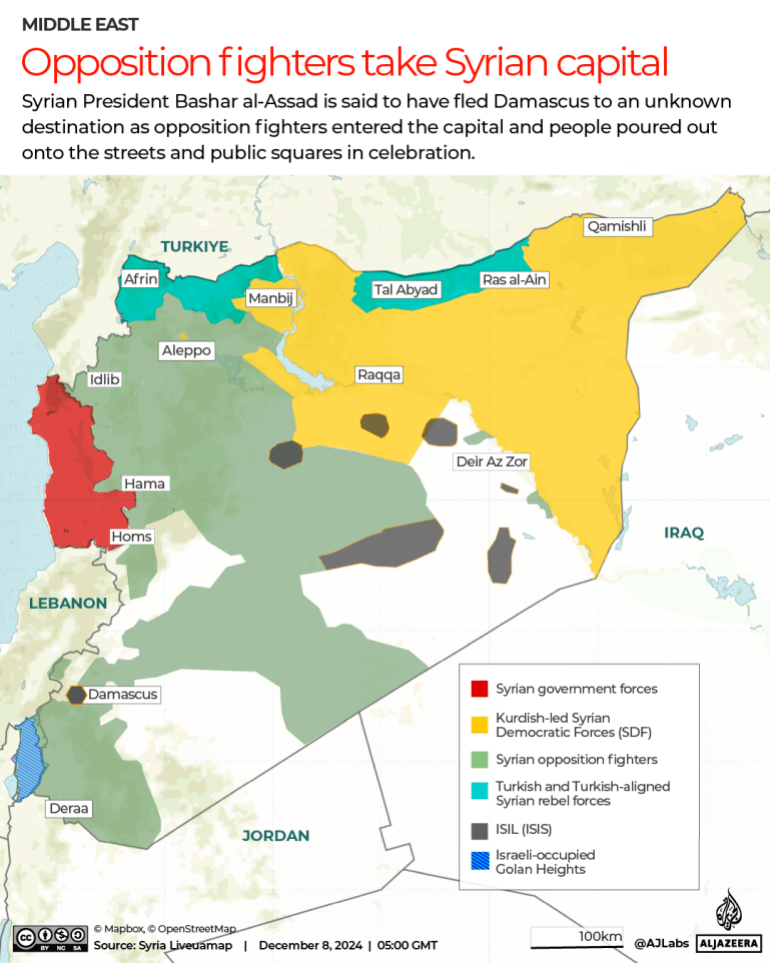
The Bashar al-Assad government collapsed on December 8, 2024, after rebel forces launched a ten-day operation that began on November 30 with the capture of Aleppo. The Islamist militant organisation Hayat Tahrir al-Sham (HTS) and the Turkish-backed Syrian National Army (SNA) commanded the military alliance. The upheaval ended nearly fifty years of the Assad family’s reign in Syria and four years of essentially static dynamics in the Syrian civil war, which has been continuing since 2011. Deposed President Bashar al-Assad fled to Moscow as the capital city of Damascus fell to HTS and its allies.
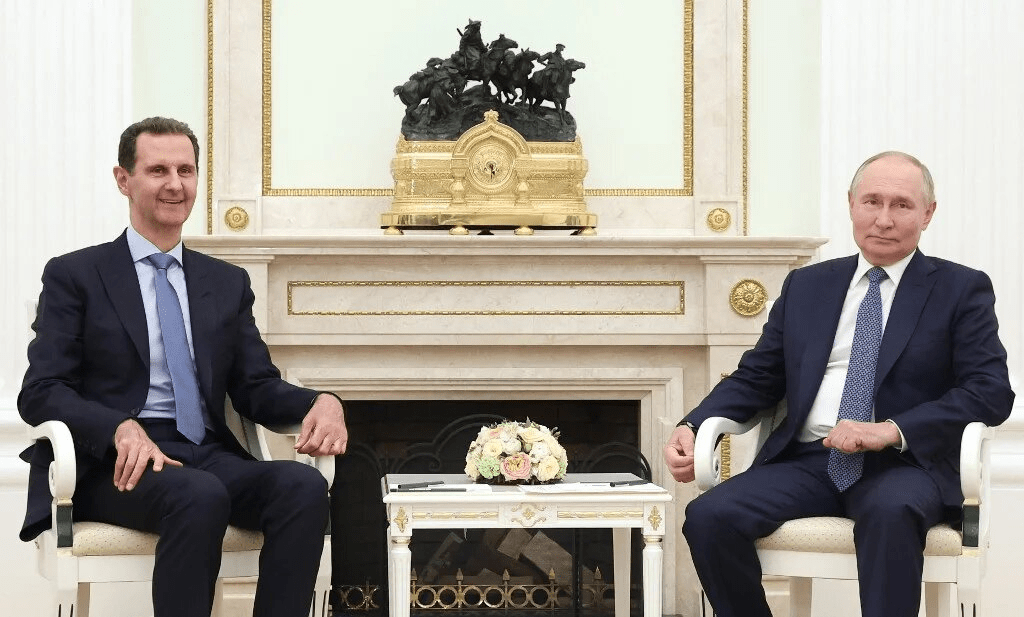
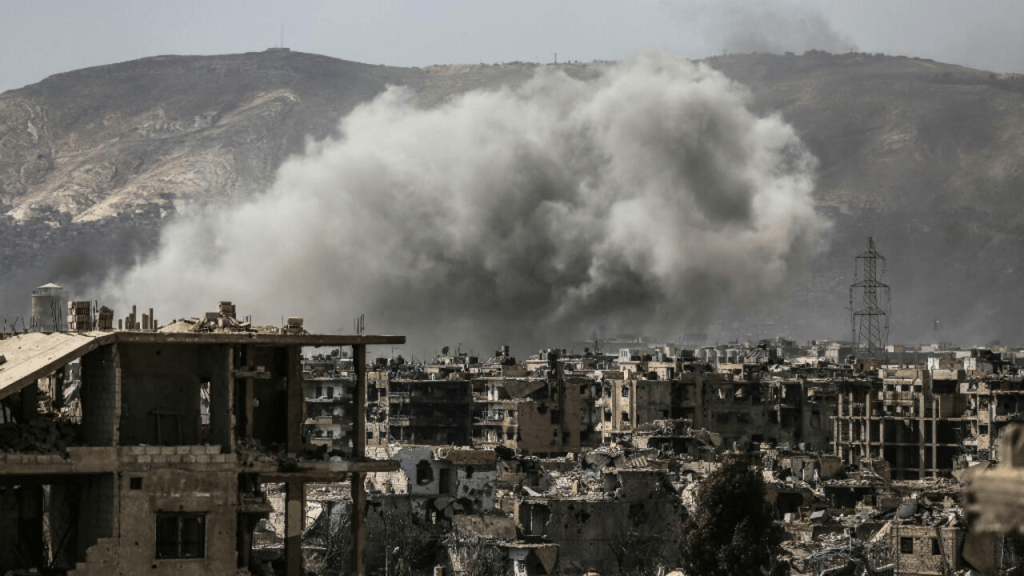
Throughout the operation, rebels liberated Assad government captives while seizing more territory. Assad’s long-time friends, Russia, Iran, and Hezbollah, did not provide major help to his Syrian Arab Army (SA) throughout the rebel onslaught. Concurrently, the Kurdish-dominated Syrian Defence troops (SDF), who control sections of northeastern Syria, are fighting Arab tribes who accuse the organisation of discriminating, while Turkey and its proxies continue to target Kurdish troops. Factionalised conflict has allowed the self-proclaimed Islamic State to retain its foothold and conduct assaults. Furthermore, following Hamas’ assault on Israel in October 2023, Israel has expanded its strikes on Iranian and Syrian military facilities in Syria, including Damascus and Aleppo airports.
Background
Protests against President Assad’s regime in 2011 quickly turned into a full-fledged war between the Syrian government, backed by Russia and Iran, and anti-government rebel groups, backed by the US and a rotating list of US allies, including France, the United Kingdom, Italy, Saudi Arabia, Turkey, Jordan, and the United Arab Emirates (UAE). Three campaigns propelled the conflict:
coalition attempts to destroy the self-proclaimed Islamic State
fighting between Syrian government and rebel forces
Turkish military actions against Syrian Kurds.
The Islamic State started capturing territory in Syria in 2013. Following a series of terrorist acts orchestrated by the Islamic State throughout Europe in 2015, the US, UK, and France, with the help of Turkey, Saudi Arabia, and other Arab allies, extended their air campaign in Iraq to encompass Syria. These countries have carried out over 11,000 air attacks on Islamic State sites in Syria, while the US-led coalition has continued to back ground operations by the Syrian Democratic Forces. Turkish military have been active in combat operations against the Islamic State since 2016, and they have begun strikes against armed Kurdish organisations in Syria.
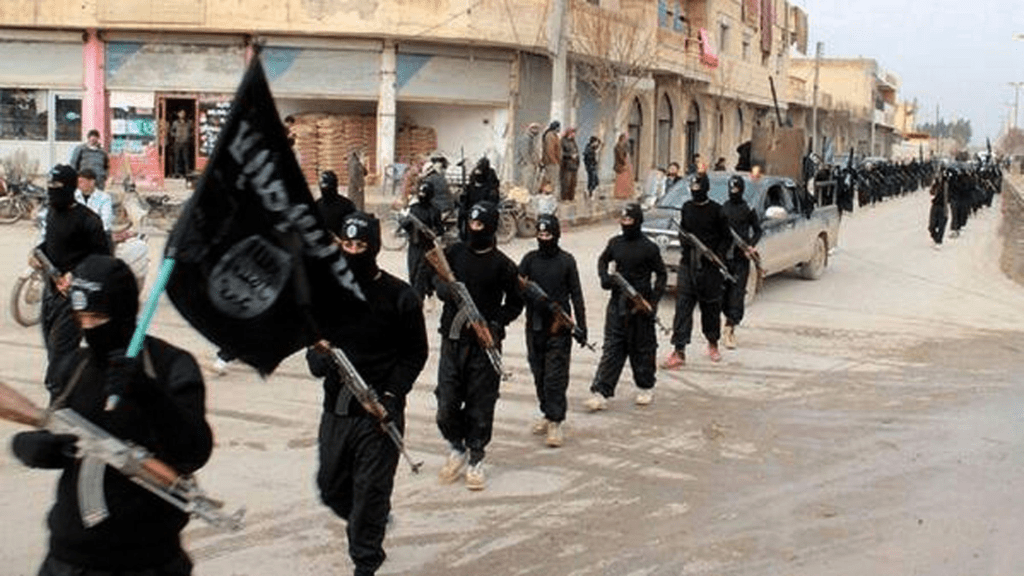
Meanwhile, in September 2015, at the Syrian government‘s request, Russia started undertaking air attacks against what it said were Islamic State targets, while Syrian government troops won several significant wins against the Islamic State, including the retaking of Palmyra. According to the US-led coalition fighting the Islamic State, Iraqi security forces and the SDF have recaptured 98 percent of the group’s previous territory in Iraq and Syria, including the towns of Raqqa and Deir al-Zour.
With Russian and Iranian help, the Syrian government has gradually retaken area from opposition troops, including the opposition’s stronghold in Aleppo in 2016. The government has been accused of employing chemical weapons multiple times during the war, prompting international censure in 2013, 2017, and 2018. Opposition troops have maintained limited authority in Idlib, northwest Syria, and along the Iraq-Syria border. However, the 2023 Turkey-Syria earthquake has rendered efficient administration practically impossible, as opposition forces struggle to service civilians’ needs.
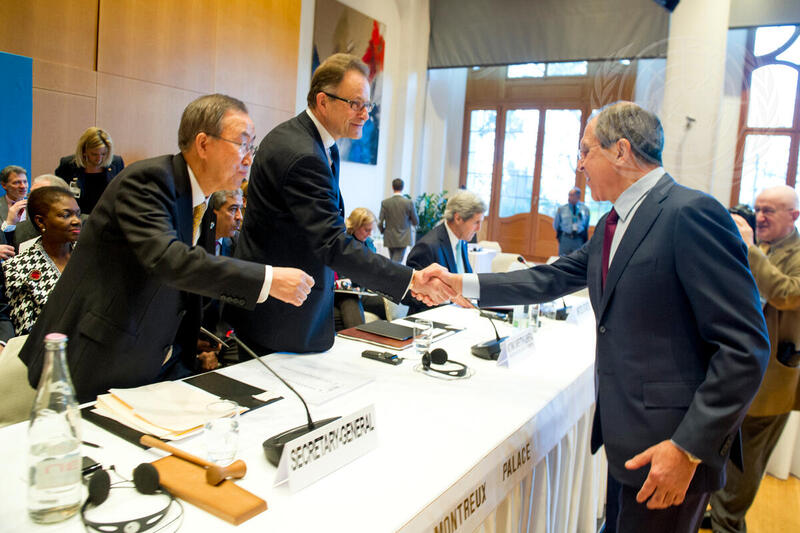
Attempts to establish a diplomatic settlement have failed. The Geneva peace talks on Syria—a UN-backed conference to facilitate a political transition led by UN Special Envoy Staffan de Mistura—have failed to reach a political resolution, as opposition groups and Syrian regime officials struggle to find mutually acceptable terms for ending the conflict. A fresh round of peace negotiations started in Geneva in May 2017, with an eighteen-person Syrian team, but have since stagnated. Also in 2017, Russia conducted peace negotiations in Astana, Kazakhstan, with Iran, Turkey, and Syrian government and armed opposition leaders, which ended in a cease-fire agreement and the construction of four de-escalation zones. However, immediately after the cease-fire was proclaimed, Syrian government troops began assaults on rebel-held regions inside the de-escalation zones.
Under President Donald J. Trump, the United States mainly withdrew from Syria, leaving just around 400 soldiers as a contingency force. On January 16, 2019, the self-proclaimed Islamic State claimed responsibility for an incident in Manbij that killed at least 19 people, four of whom were Americans. Prior to that incident, only two Americans had died in combat in Syria since the US-led conflict started. The US-led international coalition continues to launch military attacks on Islamic State remnants and Iranian-backed militias.
The withdrawal of most US soldiers raised questions about the role of other foreign players to the war, including Iran, Israel, Russia, and Turkey, as well as the future of internal actors. Growing Russian participation has been critical to the Syrian government’s progress in regaining land. While Russia has officially declared that it solely supplies air assistance to the Assad, it has sent the Wagner Group, a private military contractor, to fight in Syria. Ongoing bloodshed and proxy wars have also contributed to the revival of extremist organisations.
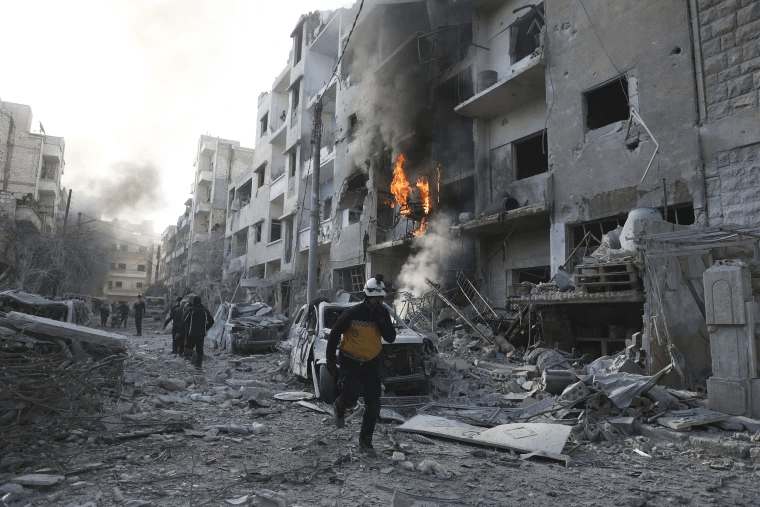
Meanwhile, the humanitarian situation in Syria remains terrible, with 7 out of every 10 Syrians seeking aid. According to the Syrian Observatory for Human Rights, more than 600,000 people have died since the conflict began. According to the United Nations’ 2023 Global Appeal, more over 6.9 million people are now internally displaced, with over 5.4 million refugees residing abroad. Many refugees have fled to Jordan and Lebanon, putting a pressure on already fragile infrastructures and scant resources. More than 3.4 million Syrians have fled to Turkey, with many attempting to find asylum in Europe.
Recent developments.
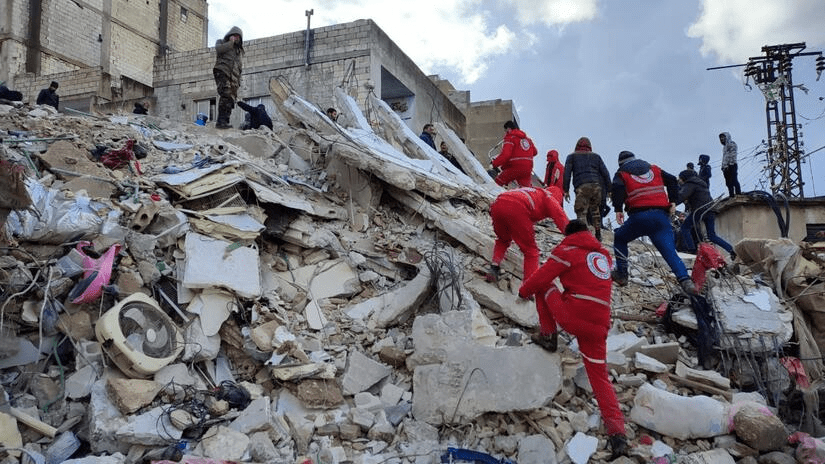
On February 6, 2023, a 7.8 magnitude earthquake and 7.5 magnitude aftershock hit southeast Turkey and northwest Syria, causing one of the biggest natural catastrophes of the century. Estimates for May 2023 placed the dead toll at around 60,000, with 50,700 in Turkey and 8,400 in Syria. Syria’s twelve-year war has significantly hampered aid efforts—the president of the World Food Programme characterised the situation as “catastrophe on top of catastrophe.” The earthquake alone is estimated to have cost Syria $5.1 billion in damages.
The geographical divides caused by Syria’s civil conflict hamper earthquake response operations. The rebels control the northwest section of Syria that was most hit by the earthquake, and the Syrian government has long limited access to the area. As a result, foreign help had to be authorised by the Turkish government before it could pass via the Bab al-Hawa border, the only humanitarian aid route between Syria and Turkey. However, the earthquake severely damaged the highways that connect Turkey to Syria, and the Turkish government was preoccupied with its own rescue operations. The first United Nations assistance convoy arrived in Bab al-Hawa on Thursday, February 9. On Friday, February 10, the Syrian government declared that foreign humanitarian organisations will be granted entry to rebel-held parts of Syria, but did not offer a date.
In May 2023, Iranian President Ebrahim Raisi met with Syrian President Bashar al-Assad in Damascus to enhance economic cooperation—the first visit by an Iranian president to Syria since the conflict. Later same month, the Arab League voted to re-admit Syria after a twelve-year ban, despite the continuation of Western sanctions on President Bashar Assad’s regime, which might dissuade oil-rich Arab countries from investing in Syria. In July 2023, Iraqi Prime Minister Mohammed Shia al-Sudan met with President Assad in Damascus to discuss drug trafficking, the repatriation of Syrian refugees, and the easing of Western sanctions.
Throughout August 2023, the Syrian army was targeted by multiple Islamic State and Israeli military strikes. Attacks by Islamic State sleeper cells in Syria, particularly in the vast desert territories they formerly ruled, have intensified in 2023. For example, the Islamic State attacked a bus transporting Syrian troops in the eastern desert region of Deir Ezzor, killing twenty-three. Meanwhile, an Israeli missile strike near Damascus in early August killed at least four Syrian troops and injured four more. Although Israel has conducted operations against what it has characterised as Iran-linked sites in Syria for years, the number and breadth have escalated in response to the October 7 Hamas assault on Israel. Since December, Israeli attacks in and around Damascus have killed over a half-dozen members of Iran’s Islamic Revolutionary Guard Corps (IRGC), including one of Iran’s senior intelligence officers.
In contrast, Iran-backed militia groups in Syria and Iraq who oppose Israel’s war in Gaza have targeted US forces in the area at least 165 times since the Israel-Hamas conflict started. To avoid a recurrence of Islamic State activities, the US now has 900 soldiers stationed in Syria. Since mid-October 2023, numerous organisations have attacked American outposts in Iraq and Syria. On November 23, drones and missiles struck US and multinational soldiers in northeastern Syria and Iraq four times in 24 hours.
In February 2024, the United States launched a series of retaliatory attacks in response to an assault in Jordan on a US military station near the Syrian border that killed three American troops. The attacks comprised more than 85 sites in Iraq and Syria, while US officials have indicated that they were simply the beginning of their reaction. In retaliation, Iran-backed militias have launched a fresh round of attacks against US sites, including a drone strike in Syria’s eastern province of Deir el-Zour, which killed seven Kurdish fighters and injured at least eighteen more.
 UPSCLOGY