
Long before the rise of modern republics in Asia, two regal dynasties – one from the heart of India and the other from the crumbling edges of a centuries-old Islamic empire – wove their destinies together through diplomacy, faith, and marriage. At the centre of this grand historical entanglement stood the princely state of Hyderabad and the once-mighty Ottoman Empire, whose familial ties created an enduring cultural bridge between South Asia and Turkey.
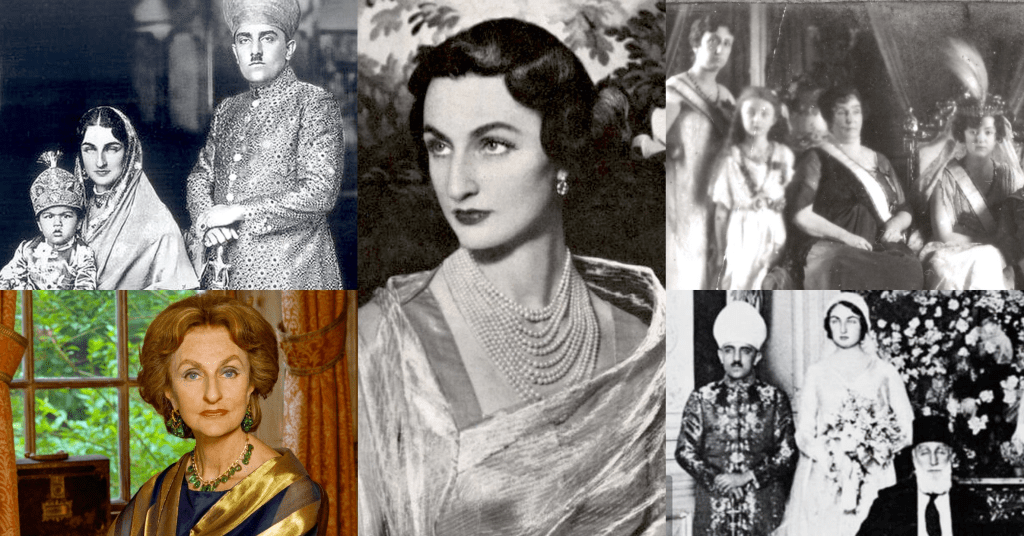
Hyderabad, then one of the wealthiest and most powerful princely states in British India, shared deep religious and political sympathies with the Ottoman Caliphate. The Nizams, rulers of Hyderabad, held the Turkish Caliphs in the highest regard.
For Mir Osman Ali Khan, the seventh Nizam and one of the richest men of his time, these ties extended beyond mere sentiment – they found expression in arranged royal marriages, opulent gifts, and diplomatic gestures of solidarity.
At a time when the Ottoman Empire had already begun to disintegrate, and its last Caliph Abdulmejid II was living in exile in France, the Nizam sought to forge a dynastic alliance with the Ottoman royal family. In a significant moment of royal diplomacy, he arranged for both of his sons – Prince Azam Jah and Prince Moazzam Jah – to marry Ottoman princesses.
On November 12, 1931, in a historic and modest ceremony held in Nice, France, Princess Durru Shehwar, daughter of the last Ottoman Caliph, married Prince Azam Jah, the Nizam’s eldest son and heir apparent. At the same event, her cousin Princess Niloufer, niece of the Caliph, was wed to Prince Moazzam Jah. Thus, the Nizam married his sons into the last vestiges of the Ottoman royal family, reinforcing the symbolic bond between Hyderabad and Turkey.
The princesses soon arrived in India and settled in the royal palaces of Hyderabad. Princess Durru Shehwar quickly earned widespread affection in her new homeland. Known for her elegance and compassion, she took an active role in Hyderabad’s social and philanthropic life – advocating for women’s education, healthcare, and the establishment of charitable institutions. Her popularity eventually eclipsed many other members of the Nizam’s family.
Though gracious and admired, life in India was challenging for both Turkish brides. Princess Niloufer, celebrated for her beauty and modesty, faced difficulties in her marital life. Her marriage to Prince Moazzam Jah eventually grew strained, and though she made a cultural mark in Hyderabad, the union failed to find happiness.
Upon the death of Mir Osman Ali Khan, it was not his sons but his grandson Mukarram Jah who inherited the symbolic title of the Eighth Nizam. Like his predecessors, Mukarram Jah too was drawn to Turkey. His first marriage was to Princess Esra, a noblewoman from an elite Turkish family. The couple had a son and a daughter, but after 15 years, the marriage dissolved when Mukarram Jah decided to settle in Australia, a move Esra declined to follow.
His later relationships reflected a life of restlessness and cultural duality. His third marriage, in 1992, was to Manolya Onur, a former Miss Turkey and a descendant of the Ottoman dynasty. The couple had a daughter named Niloufer, but the union lasted only five years. His fifth wife, Princess Zeynap Arcadi, also hailed from a prominent Turkish family, yet that relationship too ended in separation.
Despite marriages that spanned continents – from Turkey to Morocco, from England to Australia – Mukarram Jah’s heart remained in Turkey. In his final years, he chose to live a modest life in Istanbul, in a small two-room apartment surrounded by relatives from his mother’s side. His death in early 2023 marked the quiet end of a lineage once draped in imperial grandeur.
The connection between Hyderabad and Turkey was not limited to matrimony. During the twilight years of the Caliphate (1910–1924), Hyderabad State sent large sums of money to support the Caliph. In return, properties in Istanbul and Bursa were registered in the name of the Nizam.
Artifacts, rare manuscripts, and intricately crafted weapons sent by the Caliph to the Nizam now find shelter in Hyderabad’s Salar Jung Museum, a silent testimony to a cross-continental alliance that once stood proudly in the face of a changing world.
Even today, Princess Esra remains in Hyderabad, dedicating herself to the preservation of the Nizam’s legacy and heritage properties. Her presence, like the stories of Durru Shehwar and Niloufer, reminds the world of a time when royal diplomacy married tradition with ambition, binding two distant empires in shared glory and personal tragedy.
Join us on Telegram @ https://t.me/plusstudents
 UPSCLOGY