
A statement made by the groundbreaking businessman Jamsetji Nusserwanji Tata in September 1898 stunned the men of that era. He was to create an endowment to start a university devoted to scientific research by reserving fourteen buildings and four landed assets he owned in Bombay. Almost half of his personal wealth was 30 lakh rupees.
It was unheard of for Tata, a rare visionary, to foresee that India needed her own scientific and technological institutions if she was to progress. Indeed, research-based institutions were completely nonexistent in India around the start of the twentieth century. What is perhaps more surprising is that Tata intended to promote higher education through philanthropy.
From inception to completion, one of India’s most prestigious research institutes took over twenty years. The following is a history of the Indian Institute of Science (IISc) Bangalore, which can boast an alumni list that includes nearly every prominent Indian scientist.
In 1889, Lord Reay, the Governor of Bombay (and Chancellor of the University of Bombay), in his convocation address said that “India was at the parting of the ways; higher education could no longer develop if the universities remained purely examining bodies… It is only by the combined efforts of the wisest men in England, of the wisest men in India, that we can hope to establish in this old home of learning real Universities which will give a fresh impulse to learning, to research, to criticism, which will inspire reverence and impart strength and self-reliance to future generations of our and of your countrymen. The sooner we recognise our weakness on the academic side, the better.”
This call to action made a deep impact on Tata and he drafted his ward and family friend, educationist Burjorji Padshah, to help him devise a scheme to set up a leading, research-based university in India. Padshah was a versatile genius who had helped Tata shepherd the business house through its formative years and beyond. He had also played a pivotal role in setting up India’s first steel plant, the Tata Iron and Steel Company (TICSO) at Jamshedpur, and a hydro-electric power supply company.
– To acquaint himself with the nitty-gritty of higher education, Padshah spent 18 months visiting educational institutions in Europe and America before he selected Johns Hopkins University in Baltimore as a model.
Considered to be the first research university in the United States and founded on a donation given by the entrepreneur and philanthropist, Johns Hopkins, it shared many similarities with what Tata had envisioned.
Upon his return, Padshah meticulously planned the proposed institution and promptly assembled a temporary committee consisting of approximately twenty-five subject-matter specialists to formulate a strategy. An Oriental scholar and Vice-Chancellor of Bombay University, E T Candy, served as the committee’s chairman. Justice M G Ranade, a social reformer and an Indian National Congress founder, was appointed vice-chairman. Honorary secretaries were Padshah and Tata.
The plan was presented to the new Viceroy of India, Lord Curzon, in December 1898. R M Lala in his book The Creation of Wealth: The Tatas From The 19th To The 21st Century (2017), mentions the three departments proposed: (i) a scientific and technological department, (ii) a medical and sanitary department, including research in bacteriology; and (iii) a department for studies in philosophy and education, ethics and psychology, Indian history and archaeology, statistics and economics and comparative philology. Lala says, “The canvas that Jamsetji was working on was too vast for his contemporaries to fathom, far less to accept.”
From here on, it was difficult to persuade the colonial administration of the necessity to establish an institute of this size and scope in India, with an emphasis on promoting Indian scientific potential. Furthermore, Curzon’s anti-Indian attitude is well known, and he questioned the viability of such an institution. He didn’t believe it would attract enough qualified students, and if it did, where would they find work following training? He was particularly concerned that the philosophical and pedagogical departments would become politicized.
However, the report was submitted to numerous government authorities in India and England, considered at the Shimla Conference in 1899, and finally approved for the first two departments.
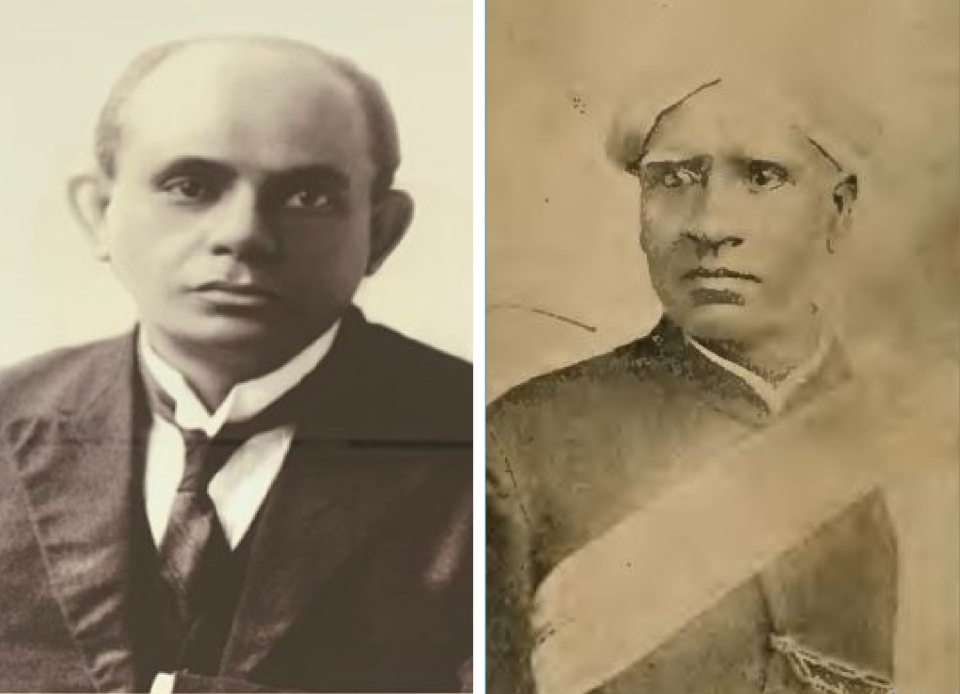
Burjorji Padshah and Sheshadri Iyer
But where would this first-of-its-kind research institute be situated?
After Padshah, the Diwan of Mysore, Seshadri Iyer, gave the most significant contribution to the IISc’s creation. When Iyer learned of the proposal to build a world-class institution, he addressed the Regent, Maharani Kempa Nanjammani Vani Vilasa Sannidhana (who was reigning for her minor son Krishnaraja Wadiyar IV), and requested assistance. She gladly accepted and gave 371 acres of property in Bangalore, along with financial assistance.
Unfortunately, J N Tata did not survive to see his goal fulfilled. He died in 1904, five years before Viceroy Lord Minto issued the vesting order for the institute on May 27, 1909.
The IISc was India’s second scientific research organization, following Kolkata’s Indian Association for the Cultivation of Science (IACS) in 1876, which was founded by Dr Mahendra Lal Sircar, a medical practitioner and social reformer, with the backing of scientist Eugène Lafont.

IISc’s iconic Main Building, designed by architect CF Stevens | IISc Archives
Finally, the idea for the IISc began to take shape. Architect C F Stevens, son of prominent English architect F W Stevens, who created some of Bombay’s most iconic structures, was tasked with designing and developing the campus, with English chemist Morris Travers serving as its first Director.
Former IISc Director P Balaram writes in an editorial published in the Current Science journal, “Travers fought an unceasing battle with Padshah and Dorab Tata on the academic directions of the Institute. Padshah favoured starting subjects like archaeology and the humanities, while Dorab Tata had visions of bacteriology and a tropical diseases institute. Travers was sharply focused, realizing that resources, both human and material, would permit only a more limited approach.”
Thus, in 1911, the IISc opened its doors to its first batch of 34 students (there were around 500 applications) with two departments – General and Applied Chemistry and Electro-Technology. Over time, more departments were added and there are 45 today.
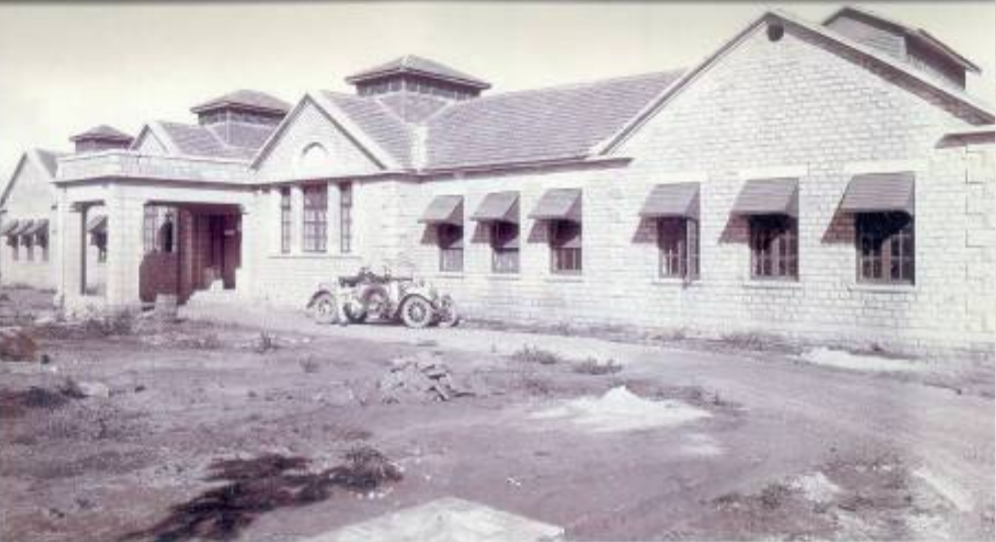
Travers once wrote, “When I first went to India, one of the first things I did was to look into the question of housing and feeding students drawn from all over India. I came to the conclusion that I should have to have several messes. Then I was right, for when we opened, I found that we had to have five (including a Brahmin mess and a European mess). Then a Muslim student turned up, and as no mess would take him in, I had to make a one-man mess for him. I still wonder how fish-eating Bengalis get on with meat-eating Punjabis.”
The IISc’s founders set a high standard from the start, and in keeping with the institute’s pioneering research ethos, it has contributed to key technological advancements and developments, as well as scientific discoveries, over the years.
M Visvesvaraya, a statesman and distinguished engineer, was appointed to the IISc council and urged scholars to focus on local industrial challenges of immediate national interest. As a result, early research into sandalwood oil extraction and lac and acetone manufacturing techniques benefited the Mysore soap and sandalwood oil companies.
– In 1933, the IISc saw its first Indian Director in Nobel Laureate C V Raman, who did his important research on crystals and spectroscopy here. It was during his tenure that the IISc opened its doors to women, but only after much controversy.
While there is no specific record of the first woman who enrolled here, there is mention of a ‘Miss M M Mehta’ in 1920 and a ‘Miss R K Christie’ in 1922. But in 1933, the institute admitted ‘Miss K Bhagvat’ or Kamala Sohonie, as she is more famously known. After graduating, she applied for the post of research student in C V Raman’s Lab. But despite being high on the merit list, she was denied the position as Raman was stubbornly against having women students work under him. She sat on a Gandhian-style dharna or protest, in front of his office, demanding justice, till Raman was forced to relent!
Sohonie’s impressive research work on proteins found in milk, pulses and legumes led to her being offered a scholarship to pursue a PhD at Cambridge University in England. Her success made Raman openly announce the admission of women to the IISc from the academic year 1937-38.
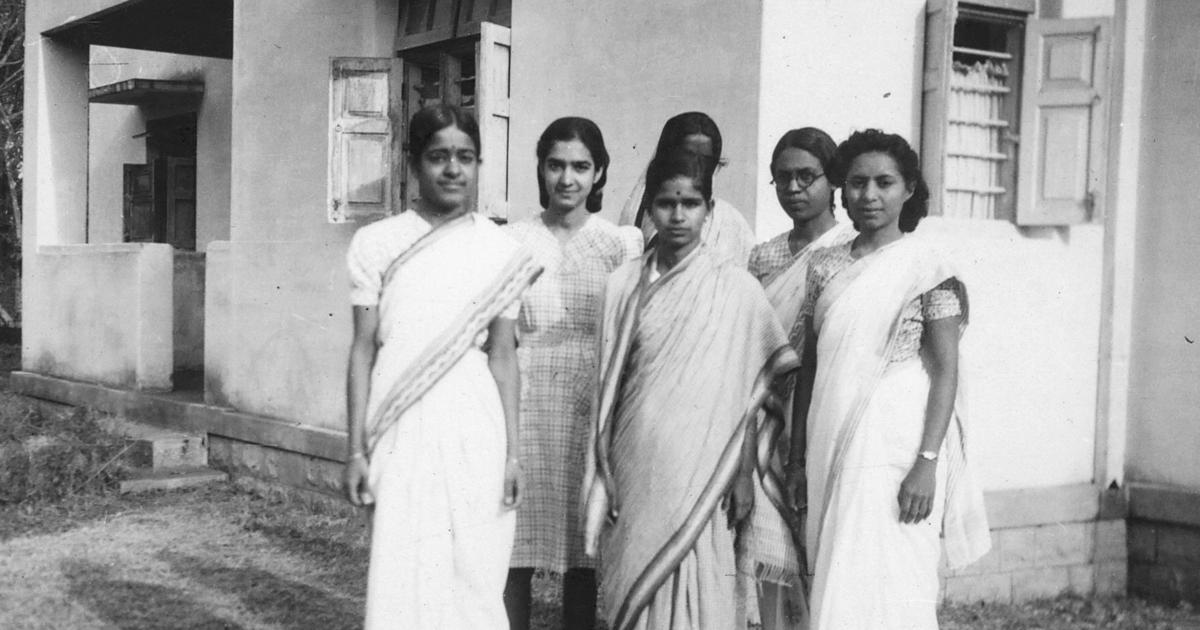
Students outside the first women’s hostel at IISc, c. 1945 | IISc Archives
Other notable IISc alumni include Homi Bhabha, Vikram Sarabhai, Anna Mani, and Satish Dhawan. This demonstrates that the IISc played an essential part in nation-building, and its story is similar to the story of science in India. It’s no surprise that IISc Bangalore consistently ranks among the world’s greatest universities.
R M Lala states in his book, “When asked what are the distinguishing characteristics of the institute, its [former] director CNR Rao says, “For success in intellectual effort, the first necessity is freedom. We are the most free in India, completely sovereign…”People can devote themselves to research.”
 UPSCLOGY