
Makar Sankranti is a joyous occasion because the Sun enters the Makar Rashi, also known as Capricorn, in the northern hemisphere, according to Hindu scriptures. The Sun is considered to be Uttarayan, or bound northward, from this day on. Of all the Indian holidays, Makar Sankranti is unique in that it is the only one that honours the Sun God. Only a small number of Sun temples can be found in India, despite the widespread belief in the Sun’s mystical powers (the Gayatri Mantra is among the most well-known Hindu chants).
Ancient Egyptian, African, and Central and South American societies all worshipped the Sun at some point during the Bronze Age. We don’t know whether the Sun was worshipped or not in India because historical records are lacking, yet depictions of the sun date back to the Neolithic period. Neolithic pottery from Piklihal in Karnataka’s Lingsaur district and paintings from the rock shelters of Singhanpur in Chhatisgarh’s Raigar area both feature depictions of the sun.
As the giver of night, Surya is first mentioned in India’s Rigveda, the first and oldest of the Vedas (said to have originated between 1500 and 1200 BCE). Due to his immense might, Surya presided over a group of sun gods that included Savitr, Vivasvant, and the Ashvins. Many Hindus believed that the sun god’s vahana, or vehicle, was a horse.
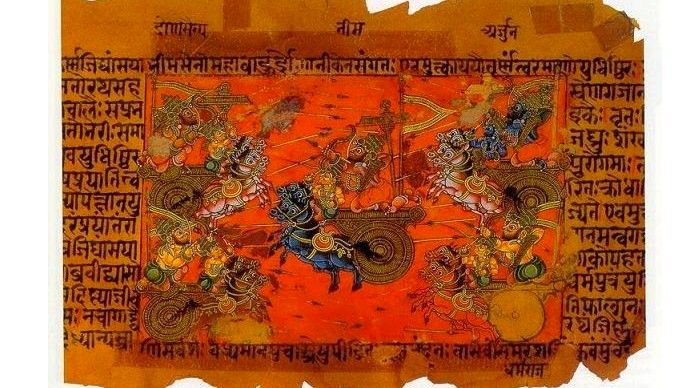
A folio from manuscript of Mahabharat depicting Karna in Kurukshetra war | Wikimedia Commons
The idea of the Sun God progressed even more in the later Vedic era. Invocations were made to him in his many roles as creator, nourisher, defender, and destroyer of the cosmos. Soroadieos (Suryadev) was worshipped by the Indians, according to the Greek writer Athaneus (200 BCE) in his work Deipnosophistai (The Learnt Banquet).
Rituals like the Ashwamedha yagna, the recital of Gayatri Mantras, and the morning and evening salutations to the Sun god are part of the Sun worship that is mentioned in the great Hindu epics of the Ramayana and the Mahabharata. Suryavanshis, or descendants of Surya, are all the famous monarchs described in the Ramayana, including Harishchandra, Manu, Ikshvaku, Dashratha, Lord Ram, Luv, and Kusha. Lord Hanuman reportedly worshipped the Sun God before setting out for Lanka to find Sita.
There were 1,088 sun worshippers in the Pandava camp, as mentioned in the Mahabharata. There may be an allusion here to the ancient Indian sun worshippers known as the Sauras. In addition, Rishi Dhaumya taught Yudhisthira the 108 names of the Sun God, which are sung in a hymn known as the “Suryashtottara Shatanama Stotra” in the Mahabharata. Unlike in the Vedas, the Sun God takes on human form in the Mahabharata’s story of Kunti and her son Karna.
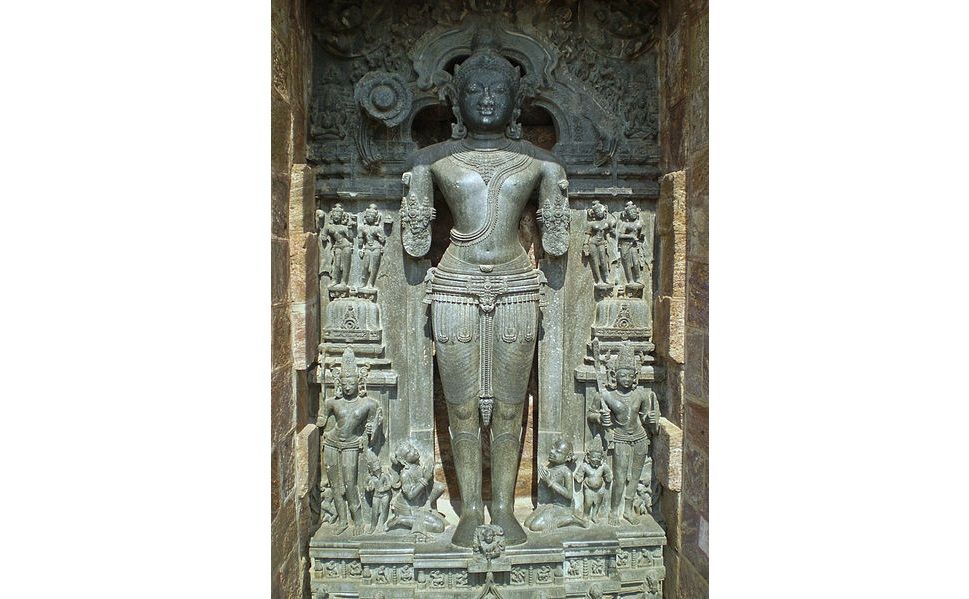
Sculpture of Surya, Konark | Wikimedia Commons
Apart from religious texts and epics, the first depiction of the Sun God in an anthropomorphic form is from the Mauryan period, which began in the third century BCE. It was discovered near Patna in Bihar, on a terracotta disc that depicts the deity riding a chariot pulled by four horses. A terracotta images of Surya have also been found at Chandraketugarh, on the medallion of Bharhut and a railing of the Bodhgaya Stupa dating back to 2 century BCE.
Nonetheless, it wasn’t until the Gupta dynasty, which lasted from the fourth to the fifth century CE, that the Sun God’s worship was revived and on a grand scale. Sun worshippers from the powerful ‘Saura’ cult emerged during this time. It is not surprising that the Sauras are described in the epic Mahabharata, given that most of the visual imagery in the epic originates from the Gupta period. According to the Sauras, if one worshipped the Sun, they could achieve moksha, or spiritual liberation. But the Saura sect faded and became part of Vaishnavism as the years passed.
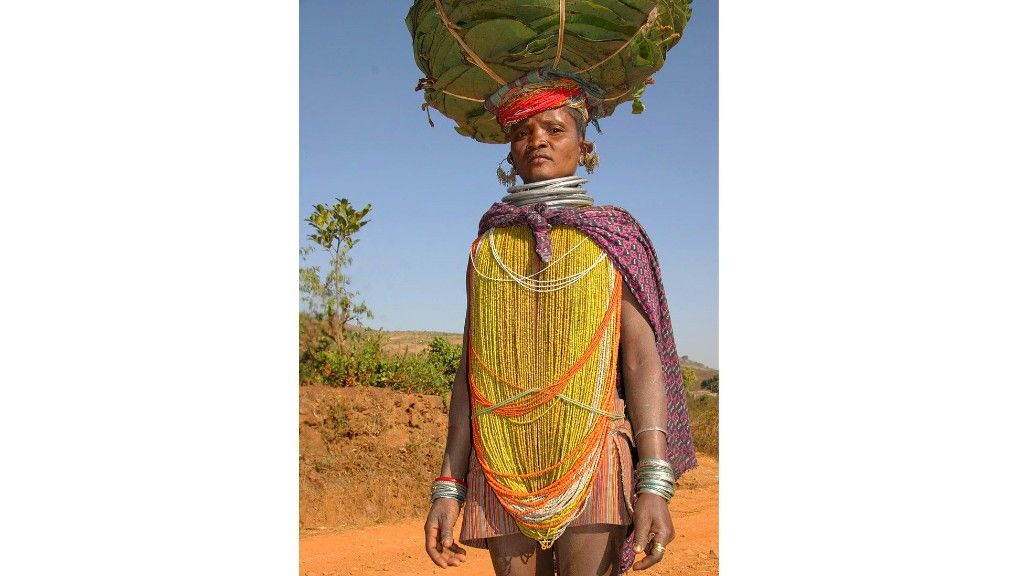
A woman from Bondo tribe | Wikimedia Commons
Yet, many indigenous Indian communities, notably in Odisha, continue to honour the sun. During harvest, weddings, and the birth of children, the Sun is revered by the Saoras and Juangs, two prominent Odisha tribes, who worship it as their ultimate deity. Dharani Devata is the name by which the Khaira people of Odisha’s Mayurabhanj district revere the Sun God.
Mahaprabhu, who stands for the Sun and the Moon, is the highest deity according to the Bondo tribe of the Malkangiri district. ‘Thakur,’ ‘Sing Bonga,’ or ‘Dharam’ are the names by which the Santalas of the Mayurbhanj and Keonjhar hill regions respect the Sun God. Similarly, the Kondh people of southern Odisha pray to the Sun God, Bona Pennu, for bountiful harvests.
Although sun worship has diminished in India, old Sun temples can be found from Tamil Nadu to Kashmir, serving as vestiges of this once-popular religion. Among the most revered and ancient Hindu sun temples in India are these:
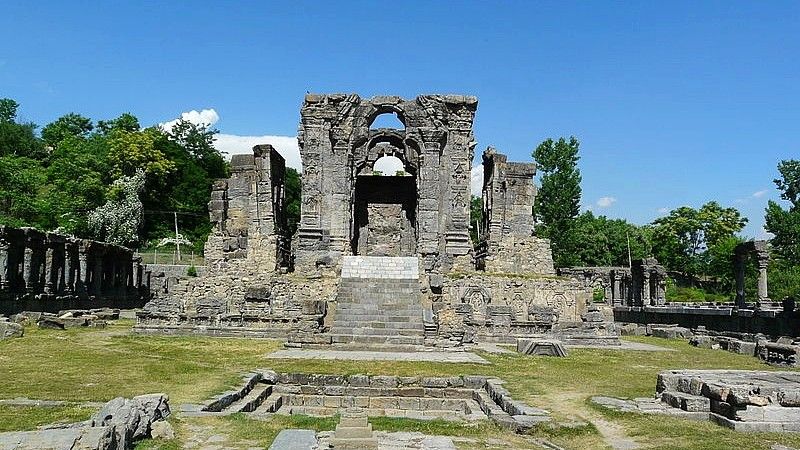
Martand Sun temple | Wikimedia Commons
The Sun Temple at Martand
Jammu and Kashmir is home to one of northern India’s most imposing religious structures, the Sun Temple of Martand. Between 725 and 756 CE, King Lalitaditya of Kashmir constructed it, and it is located five miles from Anantnag.
In addition to its massive size, this temple complex is notable for the architectural convergence it exemplifies. In it, you might see elements of Gandharan, Gupta, Chinese, Roman, and even Greek architecture.
A main shrine and eighty-four minor shrines made up the temple. The entire Kashmir valley and the Pir Panjal mountain can still be viewed from the platform it was built on. The magnificent ruins of the temple remain even after its destruction in the 15th century CE.
Even in its current state, it remains one of the most spectacular temple complexes in India!
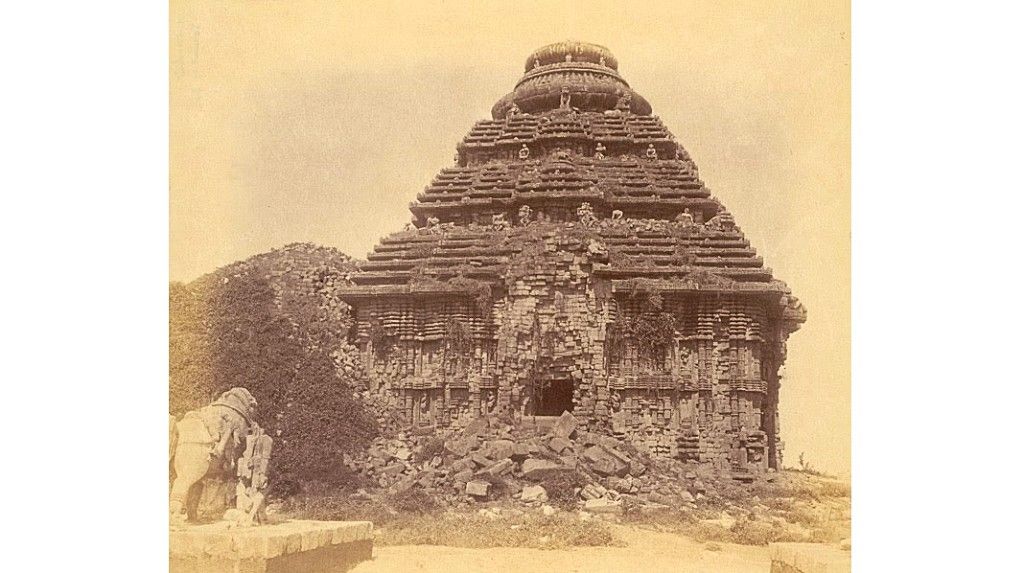
Photograph of Sun temple at Konark by William Henry Cornish, 1890 | Wikimedia Commons
Sun Temple at Konark
The most famous sun temple in India is located in Odisha, namely at Konark. Narasimhadeva I of the East Ganga dynasty had it constructed in 1255 CE in the style of the illustrious sun god’s chariot, complete with ornately carved wheels. Curiously, the chariot’s twenty-four wheels stand for the twelve months of the year, and the sundials that adorn the eight spokes of each wheel signify the eight praharas, or divisions, of the day.
The huge temple’s main dome eventually fell in due to decay. It was called the “Black Pagoda” by Europeans who travelled through the area in the 17th and 18th century because it was covered in vegetation. But when the colonial authorities cleaned the land of its remnants in the nineteenth century, Konark was once again found. Listed on the UNESCO World Heritage list today is the Sun Temple of Konark.
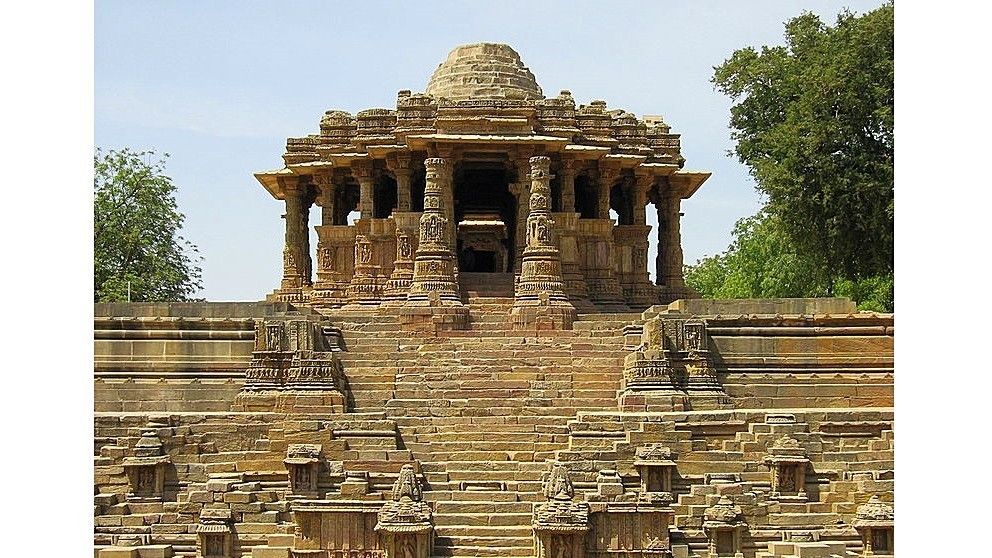
Sun Temple, Modhera | Wikimedia Commons
Sun temple at Modhera
The Sun Temple in Modhera, Gujarat, constructed by King Bhima I of the Solanki dynasty between 1026 and 1027 CE, is the most famous sun temple in western India.
On solar equinox days, the golden light of dawn would illuminate the statue of Surya in the temple’s sanctum sanctorum. Midday on the summer solstice, the sun sets squarely over the temple, leaving no shadow behind it. The Surya images at the temple, which are quite intriguing, seem to have originated in central Asia. The Sun God is seen with a belt and unusual footwear typical of central Asia.
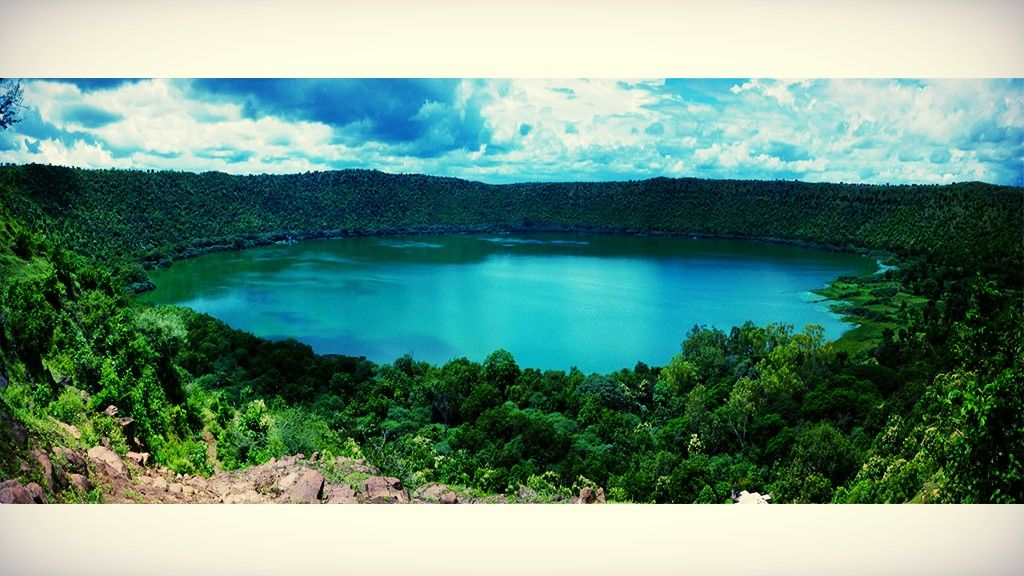
Lonar Crater Lake | Wikimedia Commons
Sun Temple at Lonar
Near the world-famous Lonar crater in Maharashtra stands a Sun temple with exquisite carvings. The Chalukya dynasty, whose kings are believed to have constructed the temple in the 12th century CE, subsequently had it turned into a Vishnu temple. ‘Daitya Sudan’ (the destroyer of evil) is a manifestation of Vishnu in this context. According to legend, the Lonar lake is home to the demon Lonasur, but the carvings on the temple ceiling show Vishnu vanquishing him.
A magnificently carved Sun temple is located at Lonar in Maharashtra, near the famous Lonar crater. Believed to have been built in the 12th century CE, by rulers of the Chalukya dynasty, this was later converted into a Vishnu temple. The Vishnu here is represented in the ‘Daitya Sudan’ (killer of demons) incarnation. On the ceiling of the temple, there are carvings depicting Vishnu killing Lonasur – a demon said to be hiding in the Lonar lake!
Sun temple at Bhuleshwar
There aren’t many sun temples in India that are still being worshipped, but this one in Bhuleshwar, close to Marine Drive in Mumbai, is among the youngest. Gujarati merchant Harjivan Vassanji Maniar had it constructed in 1899. Maniar erected this temple as an expression of his thanks after he was cured of a skin disease by worshipping the Sun God, so the story goes. Opening at daybreak and closing at sunset, the temple is open daily.
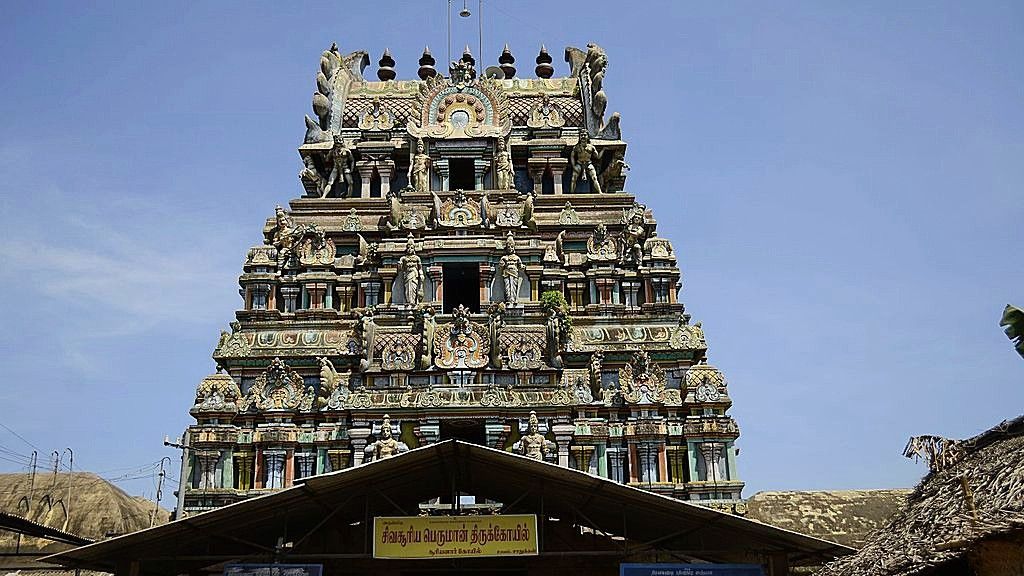
Suryanar Koil Temple, Kumbhakonam, Tamil Nadu | Wikimedia Commons
Sun Temple in Kumbhakonam
Kumbhakonam is home to a temple that honours the Sun God. In legend, King Kulottunga Chola of the Chola dynasty (1070–1122 CE) constructed the temple to commemorate the conquest of Srivijaya in the Malay archipelago. Legend has it that he constructed sun temples in both Nagapattinam and Pudukottai, demonstrating his tremendous devotion to the sun.
 UPSCLOGY